Ms. G arrived for her results holding her husband’s hand a little too tightly. The scan was clear, and her tumor had responded well to treatment. I watched her receive the news every oncologist hopes to give. She smiled, thanked me, and then asked quietly, “But what if it comes back?”
Ms. G is a composite of many patients I have met over 20 years of clinical practice, but the question she asks is real. I hear it often. It taught me something that I wish I had learned earlier: a good scan does not always bring a patient a feeling of safety.
When Treatment Works but Worry Stays
As oncologists, we view success from a clinical perspective. Success has clear markers: tumor shrinkage, stable disease, normal blood counts. From a patient’s viewpoint, such success may be shadowed by uncertainty, and uncertainty does not show up on a scan.
Cancer-related anxiety is not limited to a single day, the day of diagnosis, for example. It can arise during workups; grow with treatment side effects; return before every surveillance scan; and linger long into survivorship. For some patients, worry becomes a constant companion— even when their disease is clinically stable.
Psycho-oncology has rightly made psychological care part of cancer care. My concern is narrower. Anxiety is too often folded into a broad category of “distress,” when it deserves to be seen as a specific clinical concern that changes over time.
Anxiety Does Not Always Look Like Fear
Patients rarely say, “I am anxious.” Instead, they may tell us that they cannot sleep or concentrate. They feel restless or irritable. They cannot stop thinking about what might go wrong.
Some describe physical symptoms: heart palpitations, muscle tension, sweating, an unsettled stomach. This is where the issue becomes clinically tricky. These symptoms may overlap with cancer itself, with treatment toxicity, and with medication side effects.
 For patients facing recurrence or progression, the shape of anxiety changes again as goals of care evolve.
A patient with palpitations during chemotherapy may well be anxious. But anemia, dehydration, arrhythmia, and drug effects must be considered first. Two issues are possible, and both matter. We can dismiss anxiety as a natural reaction to cancer, or we can blame anxiety for a symptom that has a medical cause.
It also helps to separate anxiety from depression. They often travel together, but anxiety and depression are not the same. Anxiety tends to look forward, with worry, a sense of threat, and constant vigilance. Depression tends to weigh on the present, with poor mood, loss of interest, and feelings of hopelessness. Knowing the difference between anxiety and depression guides the tools and treatments we choose for our patients.
The Worry Changes as the Journey Changes
What cancer means to a patient is rarely fixed.
At diagnosis, a patient’s fears may often center on survival expectations, prognosis, treatment choices, and family. During treatment, these fears may shift toward side effects, pain, whether the treatment is working, and the cost of care.
After treatment ends, something unexpected often happens. Patients who felt secured by frequent hospital visits suddenly find themselves alone with their thoughts as appointments thin out. Many patients have told me that finishing treatment felt more frightening than starting it.
Fear of recurrence sits at the heart of survivorship. An upcoming scan, a new ache, or the anniversary of a diagnosis can bring old worries rushing back, even after years of stability. For patients facing recurrence or progression, the shape of anxiety changes again as goals of care evolve.
The lesson for practice is simple. One assessment at diagnosis cannot capture the whole journey. Anxiety should be checked again at meaningful moments, especially when circumstances change.
From Distress Screening to Asking About Anxiety
Distress screening is a valuable first step, and often this is conducted with the NCCN Distress Thermometer, a screening tool measuring a patient’s level of distress over the previous week from 0 (no distress) to 10 (extreme distress). But a high distress score does not tell us why a patient is experiencing distress.1 The cause might be money, family conflict, pain, anxiety, depression, or several of these at once. Each issue warrants a different response.
When anxiety is suspected, validated tools such as the Generalized Anxiety Disorder-7 (GAD-7) or the anxiety subscale of the Hospital Anxiety and Depression Scale (HADS-A) can help, as long as we keep in mind their limitations in people with cancer.
But a number or score does not complete the whole story. I have found that two simple questions often open the door to further insight: “What worries you most about your cancer or treatment right now?” and “how much is that worry affecting your sleep and your daily life, and how are you coping?”
The answers tell us what the patient fears, when the worry peaks, and whether it is getting in the way of treatment or daily life.
One more point matters. Screening must lead somewhere. Naming anxiety without offering support, further assessment, or referral leaves a patient with an acknowledged problem and no help.
What We Can Do in Clinic
Care of anxiety should be individualized to fit the person: how severe are the symptoms; what does the patient prefer; what is their medical situation; and what resources are available?
For mild or situational anxiety, small steps often help a great deal. Providing clear explanations of what to expect, for example knowing exactly whom to call when a worry arises; good symptom control; and practical problem-solving. Much avoidable uncertainty can be removed this way.
For persistent or clinically significant anxiety, structured psychological care becomes important. Cognitive behavioral therapy has a well-established role. Behavioral activation, physical activity when medically safe, and selected mindfulness-based programs also have supporting evidence.
The ASCO guideline on anxiety and depression in adult cancer survivors supports a stepped-care model, matching the intensity of care to the severity of symptoms.2The joint Society for Integrative Oncology–ASCO guideline also recognizes a role for selected integrative approaches, including mindfulness-based and music-based interventions, with recommendations that vary by setting and strength of evidence. 3These measures should complement, not replace, psychological or medical care.
Medication may be appropriate in cases where psychological care is unavailable, insufficient, or not preferred, with careful attention to drug interactions, side effects, and the wider cancer treatment plan.4 For example, the selective serotonin reuptake inhibitors paroxetine and fluoxetine strongly inhibit the enzyme CYP2D6 and can reduce the benefit of the selective estrogen receptor modulator tamoxifen, so other options are usually preferred.Severe anxiety, major loss of function, suicidal thoughts, or complex psychiatric presentations need prompt specialist input.
Making Anxiety Care Routine
None of this requires every oncologist to become a mental health expert. It requires a pathway in which anxiety is noticed, documented, and monitored, and the patient is referred for specialty care when needed.
In practice, that means screening at key transitions, finding the specific source of worry, understanding its impact, offering care in proportion, and asking later whether it helped. Oncology nurses, psycho-oncology teams, psychiatrists, psychologists, social workers, and palliative care teams all share this work.
Continuity Is Key
Anxiety that is noticed during chemotherapy should not vanish from view when an individual’s treatment ends or a patient’s care is transferred to another staff or team member.
There is still much to learn about cancer-related anxiety. Future research should examine how anxiety changes over the course of illness, which assessment schedules are most useful, and whether personalized interventions improve outcomes that matter to patients.
I still think about my hypothetical patient and her question. A good scan answered the clinician’s question. It did not answer the patient’s. Optimal cancer care should recognize and address both.
Disclosure: Dr. Jain is Director of Mindful Gurukul Pvt Ltd, which develops Skitii, an HRV-adaptive music therapy product for anxiety. He is an investigator on a randomized trial of HRV-adaptive music therapy for anxiety in head and neck cancer (CTRI/2025/11/116732). No funding was received for this article. No specific product is named or recommended in this article.
References
1. National Comprehensive Cancer Network (NCCN): Distress management. NCCN Guidelines Version 1.2027 October 30, 2026.
2. Andersen BL, Lacchetti C, Ashing K, et al: Management of anxiety and depression in adult survivors of cancer: ASCO guideline update. J Clin Oncol 41:3426–3453, 2023.
3. Carlson LE, Ismaila N, Addington EL, et al: Integrative oncology care of symptoms of anxiety and depression in adults with cancer: Society for Integrative Oncology–ASCO guideline. J Clin Oncol 41:4562–4591,
2023.
4. Grassi L, Caruso R, Riba MB, et al: Anxiety and depression in adult cancer patients: ESMO Clinical Practice Guideline. ESMO Open 8:101155, 2023.
5. Jain C: Onco-anxiology: A proposal for an anxiety-focused, longitudinal framework within cancer care. Front Psychol. 17:1939608, 2026.
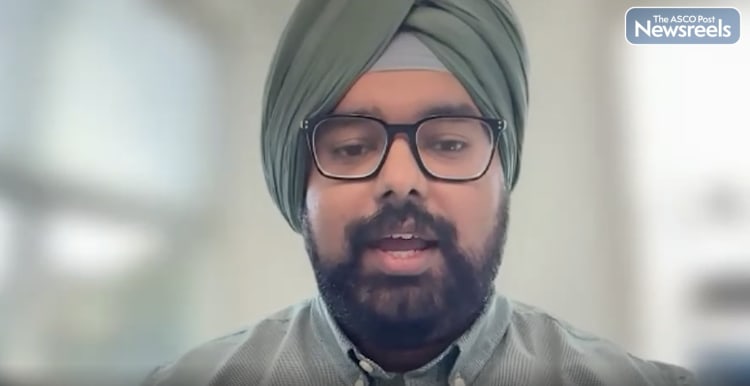
Chirag B. Jain, is a physician with 20 years of clinical practice and a focus on anxiety in people with cancer. He is Director of Mindful Gurukul Pvt Ltd in Mumbai, India. His research interests include anxiety assessment across the cancer journey and non-drug supportive care.
Disclaimer: This commentary represents the views of the author and may not necessarily reflect the views of ASCO or The ASCO Post.