Final Report on Pralsetinib in Advanced RET Fusion–Positive NSCLC
As reported in the Journal of Clinical Oncology by Besse et al, the final report from the phase I/II ARROW trial supports the efficacy of the RET inhibitor pralsetinib in patients with advanced RET fusion–positive non–small cell lung cancer (NSCLC). The initial reports from the trial supported U.S. ...
Long-Term Outcomes With Pralsetinib in RET Fusion–Positive NSCLC
Long-term follow-up of the oral selective RET inhibitor pralsetinib in patients with advanced non–small cell lung cancer (NSCLC) and a RET fusion confirms its efficacy and safety, according to final findings from the phase I/II ARROW trial published in the Journal of Clinical Oncology. “Before...
Setidegrasib in Advanced NSCLC and Pancreatic Cancer Harboring the KRAS p.G12D Variant
In a phase I trial reported in The New England Journal of Medicine, Park et al identified the toxicity profile and preliminary antitumor activity of setidegrasib, a first-in-class KRAS G12D–targeted protein degrader, in patients with previously treated advanced non–small cell lung cancer (NSCLC) or ...
Surgery Still Safe, Beneficial For Many Octogenarian Patients With NSCLC
Surgical treatment was found to be safe and demonstrate long-term quality-of-life benefits for carefully selected octogenarians with early-stage non–small cell lung cancer (NSCLC), according to findings from a prospective cohort study published in The Lancet Regional Health: Americas. “As our...
Patients With Lung Cancer May Safely Receive Adequate SBRT Dosage in One Treatment
Many people with lung cancer can be treated with a highly precise, high dose of radiation given in just one session without compromising the effectiveness of the treatment. The treatment strategy, outlined in a new publication authored by Singh et al in the International Journal of Radiation...
One-Time Low-Dose CT Screening May Reduce Lung Cancer Mortality Among Neversmokers in Asia
One-time low-dose computed tomography (CT) screening for lung cancer in a non–risk-based Chinese population led to a significant reduction in lung cancer mortality, according to the results of a prospective, nonrandomized, controlled study presented at the European Lung Cancer Congress 2026...
AI-Driven Multiagent System for Guiding First-Line Immunotherapy for NSCLC
An artificial intelligence (AI) multiagent system demonstrated correct and complete reasoning in determining the use of immunotherapy for patients with non–small cell lung cancer (NSCLC) in the first-line setting, according to findings presented during the first European Society for Medical...
Using AI to Differentiate Primary Lung Squamous Cell Carcinomas From Metastases
A multipronged artificial intelligence (AI)–assisted approach integrated into routine molecular profiling identified 3.1% of cases submitted as lung squamous cell carcinoma as metastases from other origins, revealing a meaningful rate of misdiagnosis in this patient population, according to a...
The Thymus Plays a Part in Adult Cancer Risk and Treatment Response, Research Reveals
Two papers published in Nature reveal long-disregarded functions of the thymus in adulthood, showing that the overall health of the organ impacts aging and risks for cardiovascular disease and cancer, as well as affecting response to immunotherapy in patients with cancer. “The thymus has been...
Benmelstobart Plus Anlotinib in First-Line Treatment for PD-L1–Positive Advanced NSCLC
In a Chinese phase III trial (CAMPASS) reported in The Lancet Oncology, Zhong et al found that the PD-L1 inhibitor benmelstobart plus the tyrosine kinase inhibitor anlotinib significantly improved progression-free survival vs placebo plus pembrolizumab in the first-line treatment of PD-L1–positive...
Can Viral Respiratory Infections Increase Lung Cancer Risk?
Severe COVID-19 and influenza infections may prime the lungs for cancer and can accelerate the disease’s development—but vaccination heads off those harmful effects, according to new research published by Qian et al in Cell. University of Virginia (UVA) School of Medicine researcher Jie Sun, PhD,...
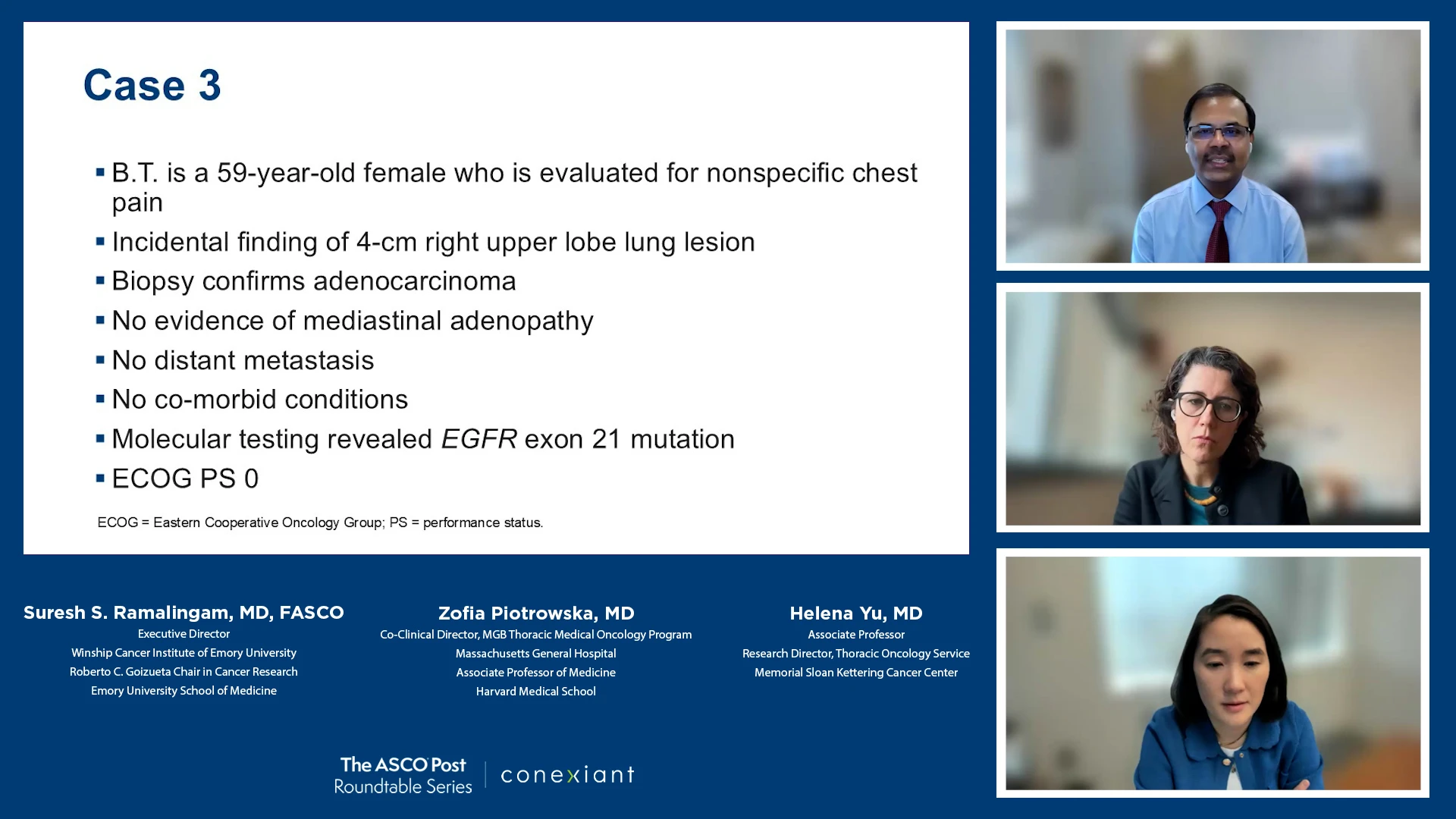
Case 3: Perioperative Management of Resectable EGFR-Mutant NSCLC
This is Part 3 of Optimizing the Care Continuum for EGFR-Mutant NSCLC, a three-part video roundtable series. Scroll down to watch the other videos from this roundtable. In this video, Drs. Suresh Ramalingam, Zofia Piotrowska, and Helena Yu discuss the perioperative management of resectable EGFR-mutant NSCLC. The patient is a 59-year-old woman with a 4-cm right upper lobe adenocarcinoma harboring an EGFR exon 21 mutation. She has no nodal involvement or distance metastases, no comorbid conditions, and an excellent performance status. In the conversation that follows, the faculty discuss the evolving role of neoadjuvant therapy for borderline resectable EGFR-mutant NSCLC and address the importance of obtaining molecular testing prior to initiating any neoadjuvant therapy. Additionally, they debate the optimal duration of adjuvant osimertinib beyond 3 years, particularly for higher-stage patients, and the current limitations of measurable residual disease assays in guiding treatment decisions outside of clinical trials.
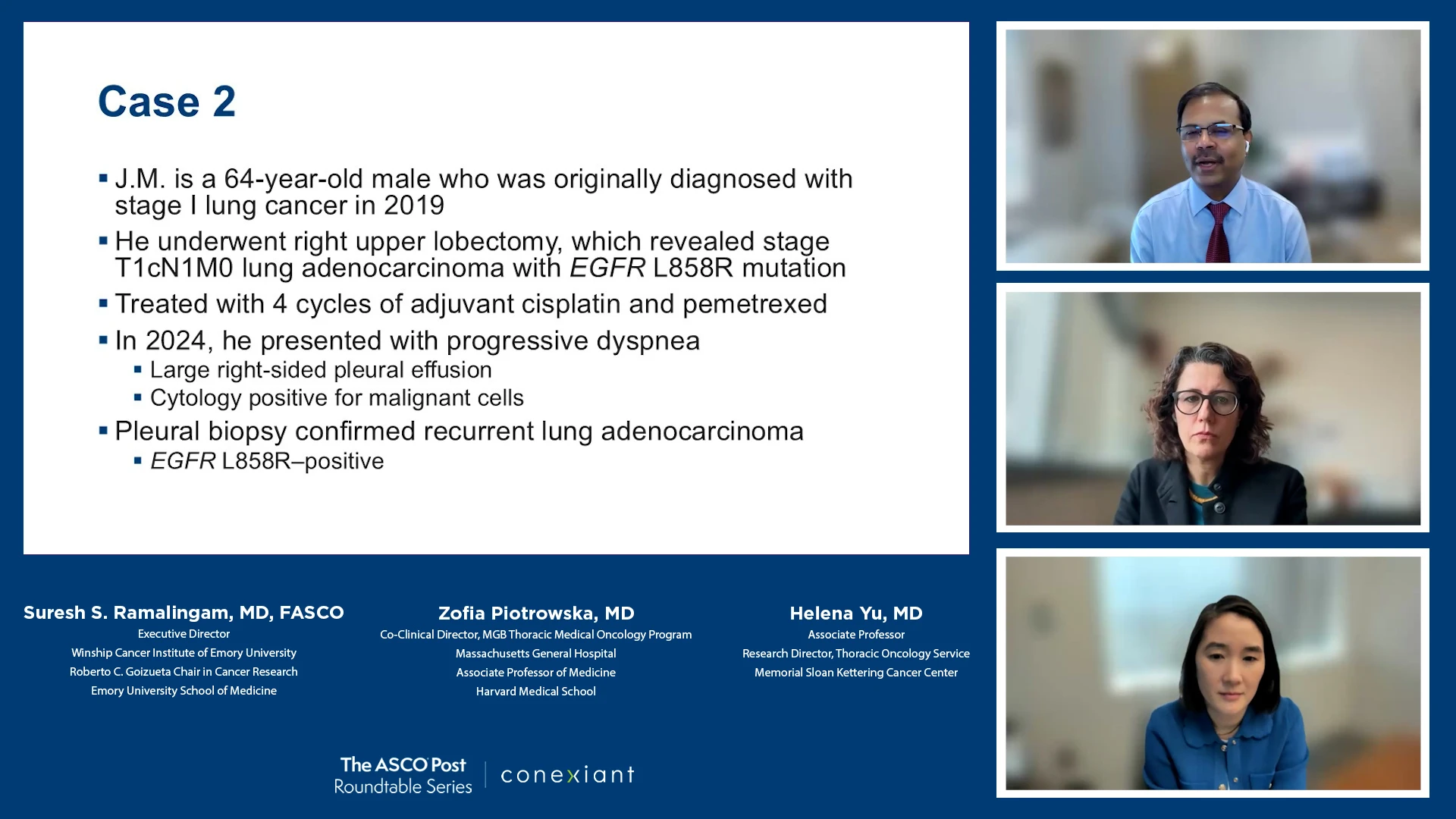
Case 2: Acquired Resistance After First-Line Osimertinib-Based Therapy in EGFR L858R–Mutant NSCLC
This is Part 2 of Optimizing the Care Continuum for EGFR-Mutant NSCLC, a three-part video roundtable series. Scroll down to watch the other videos from this roundtable. In this video, Drs. Suresh Ramalingam, Zofia Piotrowska, and Helena Yu discuss the management of acquired resistance after first-line osimertinib-based therapy in EGFR L858R–mutant non–small cell lung cancer (NSCLC). The patient is a 64-year-old male with a history of resected stage I lung adenocarcinoma with EGFR L858R mutation. He originally received adjuvant chemotherapy, later recurred with pleural disease, and was then treated with osimertinib plus chemotherapy. He experiences disease progression after 11 months with no identifiable resistance mechanism on liquid biopsy. In the conversation that follows, the faculty discuss the importance of tissue rebiopsy at progression to evaluate for histologic transformation to small cell carcinoma as well as for targetable resistance mechanisms that liquid biopsy may miss. They also address the emerging role of antibody-drug conjugates as a mechanism-agnostic second-line option following failure of osimertinib and chemotherapy. In addition, they explore the nuances of whether to continue osimertinib alongside salvage therapy.
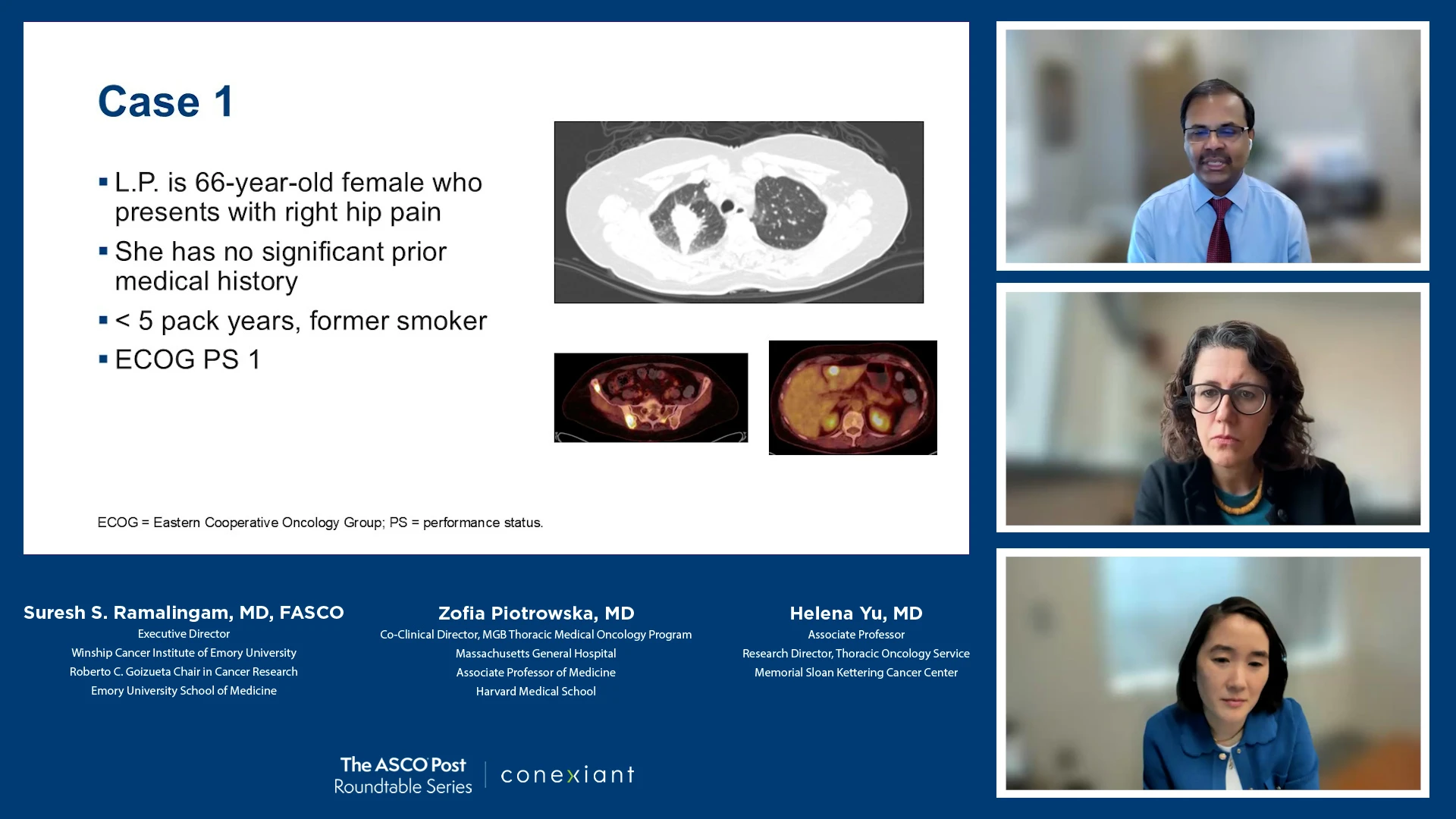
Case 1: First-Line Therapy for EGFR-Mutant Metastatic NSCLC
This is Part 1 of Optimizing the Care Continuum for EGFR-Mutant NSCLC, a three-part video roundtable series. Scroll down to watch the other videos from this roundtable. In this video, Drs. Suresh Ramalingam, Zofia Piotrowska, and Helena Yu discuss the first-line treatment of EGFR-mutant non–small cell lung cancer (NSCLC). The patient is a 66-year-old woman with a < 5 pack-year smoking history who presents with hip pain. She is found to have a right upper lobe adenocarcinoma with brain, liver, and pelvic metastases. Next-generation sequencing reveals an EGFR exon 21 mutation, co-occurring p53 mutation, MET 3+ overexpression by IHC, and negative PD-L1. In the conversation that follows, the faculty discuss the shifting treatment paradigms in the upfront setting—moving from monotherapy to combination therapy approaches—and address whether MET IHC overexpression should guide selection between the two combination approaches. In addition, they explore the role that high-risk features play in supporting treatment intensification, and the management of asymptomatic brain metastases.
Five-Year Outcomes With First-Line Nivolumab Plus Ipilimumab in Unresectable Pleural Mesothelioma
As reported in the Journal of Clinical Oncology by Scherpereel et al, 5-year findings from the phase III CheckMate 743 trial showed continued overall survival benefit of first-line nivolumab plus ipilimumab vs chemotherapy in patients with unresectable pleural mesothelioma. Study Details In the...
Research Suggests AI Pathology Models May Take Unreliable 'Shortcuts' to Identify Cancer Biomarkers
Artificial intelligence (AI) tools that detect molecular biomarker status from histologic images may be dependent upon correlational relationships with clinicopathologic features, preventing the models from learning the true causal effect of the biomarker, according to findings published in Nature...
Advanced Nonsquamous NSCLC: FDA Grants Accelerated Approval to Zongertinib
On February 26, the U.S. Food and Drug Administration (FDA) granted accelerated approval to zongertinib (Hernexeos), a kinase inhibitor, for an expanded indication for adults with unresectable or metastatic nonsquamous non–small cell lung cancer (NSCLC) whose tumors have HER2 tyrosine kinase domain ...
Lung Cancer: Variability of Open-Source AI Models in EGFR Mutation Prediction
In a study reported in JAMA Oncology, Rakaee et al identified the accuracy of open-source artificial intelligence (AI) models in predicting the presence of EGFR mutations in samples from patients with lung adenocarcinoma, including according to ancestral subgroups. Study Details The study included...
Effect of Medicaid Expansion on Diagnosis, Treatment, and Outcomes in NSCLC
In a study reported in the Journal of Clinical Oncology, Zhao et al found that patients with non–small cell lung cancer (NSCLC) in Medicaid expansion states have had improvements in earlier diagnosis, early initiation of treatment, and survival. Study Details In the study, patients newly diagnosed...
Pleurectomy/Decortication Safe in Select Patients With Pleural Mesothelioma
Pleurectomy/decortication can be completed safely in select patients with pleural mesothelioma with low postoperative mortality, according to findings from a study published in The Annals of Thoracic Surgery. “Our findings show that pleurectomy/decortication can be done safely when patients are...
Cancer Surgery Outcomes Similar Between Rural and Urban Facilities
Patients in rural areas who received surgery locally for their lung or colon cancer had comparable surgical outcomes and mortality rates to patients who underwent surgery in an urban facility, according to the results of an analysis published in the Journal of the American College of Surgeons....
FDA Approves Once-Monthly Dosing Schedule for Amivantamab and Hyaluronidase-lpuj
Today, Johnson & Johnson announced that the U.S. Food and Drug Administration (FDA) has approved a new, simplified monthly dosing schedule for amivantamab and hyaluronidase-lpuj (Rybrevant Faspro). When administered in combination with oral lazertinib for the first-line treatment EGFR-mutated...
Ultra–Low-Dose Immunotherapy in Relapsed or Refractory Solid Tumors
In an Indian single-center phase III trial (DELII) reported in the Journal of Clinical Oncology, Noronha et al found that “ultra–low-dose” immune checkpoint inhibitor therapy with the PD-1 inhibitor nivolumab was associated with improved overall survival vs standard chemotherapy among patients with ...
Lymph Node Examination Should be Expanded to Accurately Assess Metastasis in NSCLC, Research Says
Breakthrough research presented at the 2026 Society of Thoracic Surgeons (STS) Annual Meeting shows that additional lymph node evaluation is needed during surgery for non–small cell lung cancer (NSCLC) to accurately identify cancer spread (Abstract A-1588). Globally, surgical standards vary on the...
Studies Move Away From Whole-Brain Radiotherapy Standard of Care for SCLC
When patients with small cell lung cancer (SCLC) progress, as is common with such an aggressive malignancy, brain metastasis is a known possibility. As such, guidelines have recommended prophylactic cranial irradiation for patients with SCLC who respond well to first-line therapy to decrease the...
Adjuvant Aumolertinib in EGFR-Mutated NSCLC
As reported in The Lancet Oncology by Zhang et al, the Chinese phase III ARTS trial showed superior disease-free survival with the third-generation EGFR tyrosine kinase inhibitor aumolertinib as adjuvant therapy vs placebo in patients with completely resected stage II to IIIB EGFR-mutated non–small ...
Deep-Learning CT Biomarker Predicts Survival Better Than Traditional Measures in Immunotherapy-Treated Advanced NSCLC
Sako et al conducted a prognostic study to evaluate whether a fully automated deep-learning radiomic biomarker based on serial CT scans could improve prediction of overall survival in patients with advanced non–small cell lung cancer (NSCLC) receiving immune checkpoint inhibitors. Their findings,...
Adjuvant Durvalumab in Resected Early-Stage NSCLC
In a phase III trial (Canadian Cancer Trials Group BR.31) reported in the Journal of Clinical Oncology, Goss et al found that adjuvant durvalumab did not improve disease-free survival vs placebo in patients with completely resected early-stage non–small cell lung cancer (NSCLC). Study Details In...
Advanced NSCLC: Dual vs Single Checkpoint Blockade
A global meta-analysis combined detailed patient data from six major clinical trials to compare two types of immunotherapies for advanced non–small cell lung cancer (NSCLC): dual immunotherapy (a combination of CTLA-4 and PD-1/PD-L1 inhibitors) and single immunotherapy (PD-1/PD-L1 inhibitors...
Savolitinib Plus Osimertinib in Advanced EGFR-Mutant, MET-Amplified NSCLC
In an interim analysis of a Chinese phase III trial (SACHI) reported in The Lancet, Lu et al found that the combination of savolitinib and osimertinib prolonged progression-free survival vs chemotherapy in patients with advanced EGFR-mutated, MET-amplified non–small cell lung cancer (NSCLC). Study...
Chemoradiation Plus Atezolizumab in Limited-Stage Small Cell Lung Cancer
As reported in the Journal of Clinical Oncology by Higgins et al, the phase III NRG Oncology/Alliance LU005 trial showed no overall survival benefit with the addition of atezolizumab to concurrent chemoradiation (CRT) in patients with limited-stage small cell lung cancer (LS-SCLC). Study Details In ...
Associations Found Between Air Pollutants and Lung Cancer Subtypes
Both particulate and gaseous air pollutants were linked with subtypes of lung cancer, according to a study published by Diver et al in Environmental Pollution. The analysis, led by investigators from the Barcelona Institute for Global Health (ISGlobal) and the American Cancer Society, showed that...
Medical Societies Caution Misinformation May Drive Underuse of Lung Cancer Screening
Repeated methodological flaws in published research result in misinformation that may cause eligible patients to forgo or not be offered lung cancer screening, according to a joint publication from the Society of Thoracic Surgeons (STS), American Society for Radiation Oncology (ASTRO), and American ...
SCLC: Small Study Tests Efficacy of CTCs in Predicting Response to Tarlatamab
A research team has discovered that a particular marker on circulating tumor cells (CTCs) may indicate whether a patient with small cell lung cancer (SCLC) will experience a lasting response to tarlatamab-dlle, a newly approved immunotherapy. The findings, which were published by Mishra in Cancer...
Machine Learning–Guided ‘Optical Biopsy’ Accurately Identifies Malignant Lung Nodules Intraoperatively
In a cohort study reported in JAMA Network Open, Azari et al evaluated whether machine learning–guided analysis of intraoperative molecular imaging (IMI) data could accurately and rapidly determine the malignant potential of indeterminate lung nodules during surgery. The study was undertaken to...
FDA Approves Amivantamab and Hyaluronidase-lpuj for Subcutaneous Injection
On December 17, the U.S. Food and Drug Administration (FDA) approved amivantamab and hyaluronidase-lpuj (Rybrevant Faspro) for subcutaneous injection for adult patients across all indications approved for the intravenous formulation of amivantamab (Rybrevant). PALOMA-3 The subcutaneous injection of ...
Amivantamab Plus Lazertinib in Atypical EGFR-Mutated Advanced NSCLC
As reported in the Journal of Clinical Oncology by Tomasini et al, findings in a cohort of the early-phase CHRYSALIS-2 trial indicate activity of amivantamab plus lazertinib in patients with atypical EGFR-mutated advanced non–small cell lung cancer (NSCLC). Study Details In the international trial, ...
Ironically, Smoking May Have Saved My Life
I was diagnosed with stage IV non-small cell lung (NSCLC) adenocarcinoma on August 1, 2013—World Lung Cancer Day. If it hadn’t been for an article that caught my eye the year before about the recommendation from the United States Preventive Services Task Force that all men aged 65 to 75 who have...
Research Supports FDA Approval of Sevabertinib for HER2-Mutant Lung Cancer
The U.S. Food and Drug Administration (FDA) has approved sevabertinib, an oral targeted therapy, for adult patients with non-small-cell lung cancer (NSCLC) whose tumors harbor certain HER2 (ERBB2) mutations and who have previously received chemotherapy or immunotherapy. The approval reflects a...
Sacituzumab Tirumotecan Improves Survival in EGFR-Mutated NSCLC After Tyrosine Kinase Inhibitor Failure
Sacituzumab tirumotecan, a novel TROP2 antibody-drug conjugate, was found to significantly improve both progression-free and overall survival compared with platinum-based chemotherapy in patients with EGFR-mutated non–small cell lung cancer (NSCLC) who had experienced disease progression following...
Mammography-Based Outreach Increases Lung Cancer Screening Enrollment in Eligible Women
Women who undergo mammography to screen for breast cancer can be reviewed and recommended for additional lung cancer screening, thereby increasing enrollment, according to the results of a study published in the Journal of the American College of Radiology. The study, called Coordinate a Lung...
Are Glycemic Index and Load Associated With Lung Cancer Risk?
Based on the results of a population-based cohort study published in Annals of Family Medicine by Wang et al, high dietary glycemic index is linked to increased risks of lung cancer, non–small cell lung cancer (NSCLC), and small cell lung cancer (SCLC), whereas glycemic load is inversely associated ...
Second-Line Pembrolizumab Plus Lenvatinib in Pleural Mesothelioma
In a cohort of a Dutch single-center phase II study (PEMMELA) reported in The Lancet Oncology, Douma et al found that pembrolizumab plus lenvatinib was active in patients with pleural mesothelioma whose disease progressed after treatment with nivolumab plus ipilimumab. In cohort 1 in the trial,...
Lung Cancer Deaths Prevented and Life-Years Gained From Lung Cancer Screening: Current vs 100% Screening Uptake
In a study reported as a research letter in JAMA, Bandi et al compared estimated deaths prevented and life-years gained with current uptake vs 100% uptake of annual lung cancer screening in eligible U.S. individuals. Study Details The study used data obtained from the 2024 National Health Interview ...
Exploratory FLAURA2 Analysis Confirms Overall Survival Benefit for Osimertinib in NSCLC Subgroups
An exploratory overall survival analysis of the phase III FLAURA2 trial confirmed the overall survival benefit of adding osimertinib to chemotherapy in patients with non–small cell lung cancer (NSCLC) and mutations in the epidermal growth factor receptor (EGFR) not previously treated for advanced...
Lung Cancer Screening Criteria: NELSON vs PLCOm2012
In a German study (HANSE) reported in The Lancet Oncology, Vogel-Claussen et al found that the PLCOm2012 low-dose computed tomography (CT) lung cancer screening eligibility criteria were more effective than the NELSON criteria in the detection of lung cancer. Study Details The prospective cohort...
External Validation Confirms Ability of AI Model to Stratify Recurrence Risk in Early-Stage Lung Cancer
A machine learning–based survival model, incorporating preoperative CT images and routinely available clinical data, outperformed standard clinical staging systems in predicting recurrence after surgery in patients with lung cancer, especially in stage I, and showed correlations with established...
New Approvals in Hematologic Malignancies, Skin Cancer, and Small Cell Lung Cancer
Here are brief reports on four oncology approvals by the U.S. Food and Drug Administration (FDA) in October 2025: • Menin Inhibitor in NPM1-Positive AML : On October 24, 2025, the FDA approved revumenib (Revuforj), a menin inhibitor, for the treatment of relapsed or refractory acute myeloid...
Ivonescimab, a Dual-Targeting Bispecific Antibody, Improves Progression-Free Survival in Squamous NSCLC
In the phase III HARMONi-6 trial, conducted in China, the bispecific antibody ivonescimab, given with chemotherapy, improved progression-free survival by 4.2 months over the PD-1 inhibitor tislelizumab-jsgr plus chemotherapy, a 40% reduction in risk as first-line treatment of advanced squamous...
Long-Term Survival With Stereotactic Ablative Radiotherapy vs Surgery for Early-Stage NSCLC
With 10 years of follow-up, no significant difference in survival rates was reported between patients who were treated with stereotactic ablative radiotherapy (SABR) or video-assisted thoracoscopic surgery (VATS) for early-stage non–small cell lung cancer (NSCLC). These findings from the revised...
