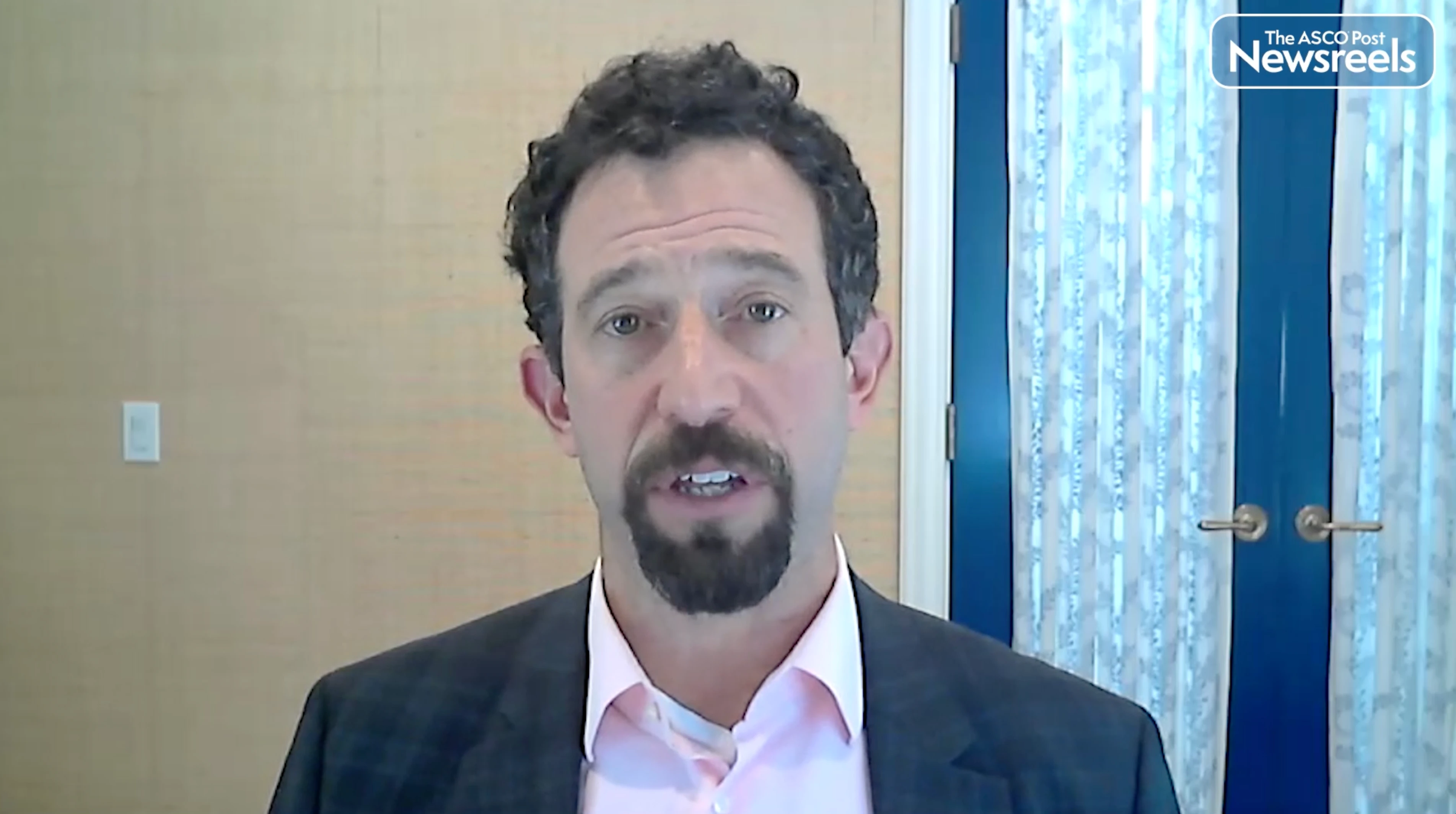
Anne Chiang, MD, PhD, on Targeting B7-H3 in Second-Line SCLC Treatment: Novel ADCs
IASLC WCLC 2026
Anne Chiang, MD, PhD, of Yale University School of Medicine, provides commentary on two China-based phase III studies presented in Presidential Symposium 1: TAISHAN-02, which looked at the antibody-drug conjugate (ADC) tambotatug pelitecan vs topotecan among patients with relapsed small cell lung cancer (SCLC), and ARTEMIS-008, which looked at another ADC, risvutatug rezetecan, among patients with SCLC whose disease progressed on and after platinum-based chemotherapy. Both agents target B7-H3 and showed promising efficacy and safety in this setting (Abstracts PL02.03 and PL02.04).
Jonathan W. Goldman, MD, of the University of California, Los Angeles, reviews findings from the phase II DeLLphi-309 study, which examined the efficacy, safety, and pharmacokinetics of tarlatamab extended-interval dosing regimens (20 mg every 3 weeks and 30 mg every 4 weeks) in comparison to the usual dose of 10 mg every 2 weeks in patients with small cell lung cancer (SCLC) (Abstract OA05.01).
Roy S. Herbst, MD, PhD, of Dartmouth Cancer Center, discusses 8-year overall survival data from the landmark ADAURA trial, which showed the sustained long-term benefit of adjuvant therapy with osimertinib for patients with completely resected, EGFR-mutated stage IB–IIIA non–small cell lung cancer (NSCLC) (Abstract PL03.01).
Ricardo Sales dos Santos, MD, PhD, of the ProPulmão Institute, discusses data from the Third Brazilian Early Lung Cancer Trial (BRELT3). The study found low-dose computed tomography (CT) lung cancer screening using a mobile unit is feasible in socially vulnerable populations in resource-limited settings. Community-based recruitment, particularly through community health workers, improved the inclusion of high-risk and underserved groups, supporting the expansion of organized screening programs to promote equitable access and reduce lung cancer mortality (Abstract MO14.03).
Julia Rotow, MD, of Dana-Farber Cancer Institute, discusses the primary results from the phase III DESTINY-Lung04 trial, which evaluated first-line trastuzumab deruxtecan (T-DXd), a HER2-directed antibody-drug conjugate, against pembrolizumab plus platinum chemotherapy in patients with advanced/metastatic HER2-mutant non–small cell lung cancer (NSCLC) (Abstract PL03.08).
Chad G. Rusthoven, MD, of the University of Colorado School of Medicine, presents results from the international phase III SWOG S1827 MAVERICK trial, which showed that brain MRI surveillance alone improved cognitive failure–free survival compared with MRI surveillance plus prophylactic cranial irradiation in patients with small cell lung cancer (SCLC). The findings support MRI surveillance alone as the standard of care for patients with SCLC (Abstract PL02.01).