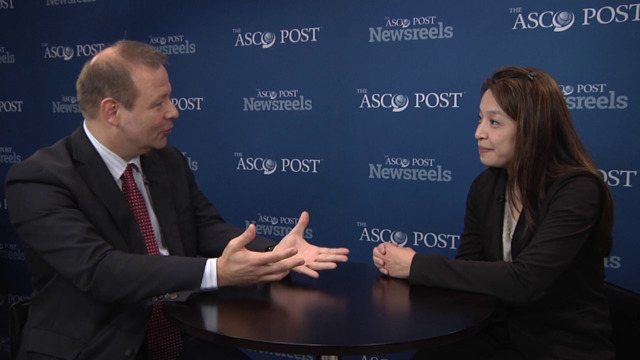
Tony Mok, MD, and James O. Armitage, MD, on The Current State of Cancer Research and Treatment: The Asian Perspective
2015 ASCO Annual Meeting
James O. Armitage, MD, of the University of Nebraska Medical Center, and Tony Mok, MD, of The Chinese University of Hong Kong, discuss oncology from an international point of view.
Anil D’Cruz, MD
Anil D’Cruz, MD, of Tata Memorial Hospital, discusses results from his study that seem to resolve a 50-year-long debate on performing elective neck dissection at the time of primary surgery––a potentially practice-changing finding (Abstract LBA3).
John L. Marshall, MD
John L. Marshall, MD, of Georgetown University, discusses how the cost of care affects behavior and decision-making on the part of patients and oncologists.
Nicholas C. Turner, MD, PhD
Nicholas C. Turner, MD, PhD, of the Royal Marsden Hospital NHS Trust, discusses fulvestrant and palbociclib as a treatment option in pre- and postmenopausal women with hormone receptor–positive, HER2-negative metastatic breast cancer that progressed on prior endocrine therapy (Abstract LBA502).
Derek Raghavan, MD, PhD
Derek Raghavan, MD, PhD, of the Levine Cancer Institute, gives his insights into key genitourinary cancer clinical trials presented at the 2015 ASCO Annual Meeting and his thoughts on where the research is headed.
Dung T. Le, MD, and Axel Grothey, MD
Dung T. Le, MD, of Sidney Kimmel Comprehensive Cancer Center at Johns Hopkins University, and Axel Grothey, MD, of the Mayo Clinic, discuss how mismatch repair status predicts clinical benefit of immune checkpoint blockade with pembrolizumab (Abstract LBA100).