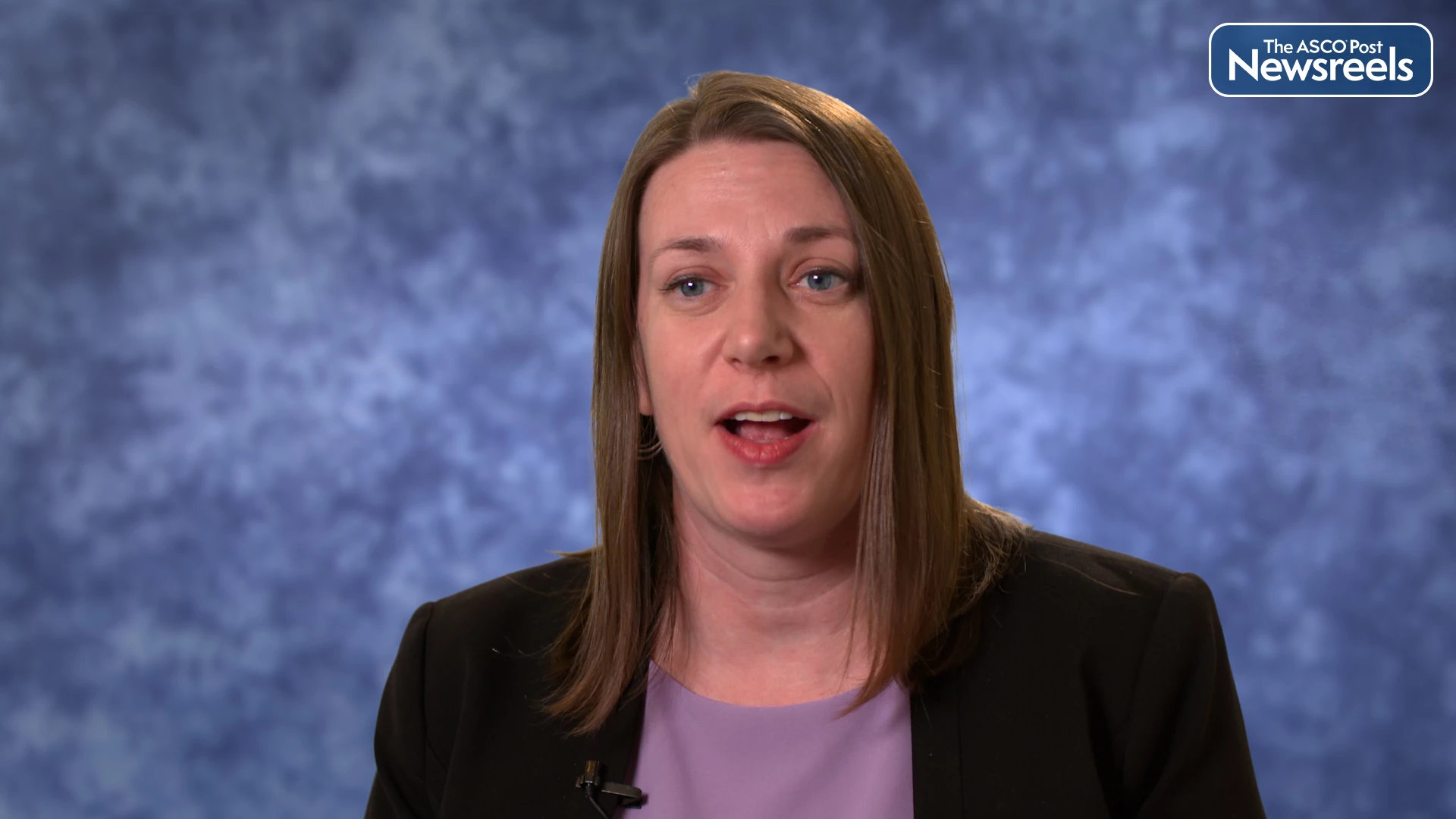
Mikkael A. Sekeres, MD, on Therapies for Hematologic Cancers: Is More or Less Better?
2023 ASH
Mikkael A. Sekeres, MD, of the Sylvester Comprehensive Cancer Center at the University of Miami Miller School of Medicine, reviews key abstracts from ASH 2023 on treatment of myelofibrosis, chronic lymphocytic leukemia, large B-cell lymphoma, and acute myeloid leukemia (Abstracts 620, 631, 781, 425).
The ASCO Post Staff
Andrew Srisuwananukorn, MD, of The Ohio State University Comprehensive Cancer Center, discusses a novel artificial intelligence model that can distinguish between prefibrotic primary myelofibrosis and essential thrombocythemia. This proposed model may assist clinicians in identifying patients who may benefit from disease-specific therapies or enrollment in clinical trials (Abstract 901).
The ASCO Post Staff
Jeffrey E. Rubnitz, MD, PhD, of St. Jude Children’s Research Hospital, discusses study findings suggesting that pharmacogenomic differences between Black and White patients should be considered when tailoring induction regimens to improve outcomes of all patients and bridge the racial disparity gap in acute myeloid leukemia treatment (Abstract 386).
The ASCO Post Staff
Sanjal H. Desai, MBBS, of the University of Minnesota, discusses results from a multicenter cohort, which shows that, for transplant-eligible patients with relapsed or refractory classical Hodgkin lymphoma, PD-1–based salvage therapy at any point before transplantation is associated with improved progression-free survival, compared with brentuximab vedotin or chemotherapy-based salvage regimens (Abstract 182).
The ASCO Post Staff
Danai Dima, MD, of the Taussig Cancer Institute, Cleveland Clinic, discusses teclistamab-cqyv, a B-cell maturation antigen approved in October 2022 for patients with relapsed or refractory multiple myeloma who have received at least four prior lines of therapy. Dr. Dima and her team evaluated the real-world safety and efficacy of this agent and found encouraging evidence of efficacy in a real-world setting (Abstract 91).
The ASCO Post Staff
Jennifer A. Woyach, MD, of The Ohio State University Comprehensive Cancer Center, discusses phase I/II findings of the BRUIN study on the use of pirtobrutinib after covalent Bruton’s tyrosine kinase (BTK) inhibitors in patients with chronic lymphocytic leukemia or small lymphocytic lymphoma (CLL/SLL). The results suggest that continuing BTK pathway inhibition following a covalent BTK inhibitor may be an important sequencing approach to consider in the treatment of CLL/SLL (Abstract 325).