
Shubham Pant, MD, MBBS, on Novel RAS-Targeting Therapy Daraxonrasib Doubles Overall Survival in Metastatic Pancreatic Cancer
Shubham Pant, MD, MBBS, of The University of Texas MD Anderson Cancer Center, discusses the practice-changing results of the phase III RASolute 302 study, which showed that daraxonrasib doubled median overall survival compared with standard chemotherapy in pretreated metastatic pancreatic cancer (Abstract LBA5).

Asaf Maoz, MD, on Pancreatic Cancer Screening: Potential Blood-Based Biomarkers
Asaf Maoz, MD, of Dana-Farber Cancer Institute, Mass General Brigham, and Harvard Medical School, talks about whether prospective assessment of CA 19-9 has utility as part of pancreatic cancer surveillance among high-risk individuals (Abstract 10527).
Jennifer J. Knox, MD, FRCPC, on RASolute 302 Findings: Expert Point of View
Jennifer J. Knox, MD, FRCPC, of Princess Margaret Cancer Centre, provides expert commentary on a phase III study of daraxonrasib vs chemotherapy in previously treated metastatic pancreatic cancer (Abstract LBA5).
Daraxonrasib Extends Median Survival in Previously Treated Pancreatic Cancer
Median Overall survival was nearly doubled among patients with previously treated metastatic pancreatic cancer who received the multiselective RAS(ON) inhibitor daraxonrasib in the phase III RASolute 302 trial, the results of which were presented at the Plenary Session of the 2026 ASCO Annual...

Julie R. Gralow, MD, FACP, FASCO, on Highlights of the 2026 ASCO Annual Meeting
Julie R. Gralow, MD, FACP, FASCO, Chief Medical Officer and Executive Vice President of ASCO, provides an overview of the highlights of this year’s meeting, including practice-changing data included in the Plenary Session.

Brian M. Wolpin, MD, MPH, and Eileen M. O’Reilly, MD, on Daraxonrasib in Previously Treated Metastatic Pancreatic Cancer
Brian M. Wolpin, MD, MPH, of Dana-Farber Cancer Institute, and Eileen M. O’Reilly, MD, of Memorial Sloan Kettering Cancer Center, describe results from the phase III RASolute 302 trial, which evaluated the RAS(ON) muliselective inhibitor daraxonrasib in previously treated patients with metastatic pancreatic adenocarcinoma (Abstract LBA5).
Lillian L. Siu, MD, on Liquid KRAS Mutation Screening in Patients With Advanced Pancreatic Cancer
Lillian L. Siu, MD, of Princess Margaret Cancer Centre, discusses the clinical utility of liquid biopsy testing for common KRAS variants to facilitate matching patients with pancreatic ductal adenocarcinoma to appropriate early-phase trials (Abstract 3049).
Preclinical Study in Mice Addresses a Question: Should RAS Inhibitors Be Given Preemptively?
With recent data that RAS inhibition can improve survival in metastatic pancreatic cancer,1 the optimization of these agents has become a research priority. Minh Than, MD, PhD, a clinical and research fellow in Hematology-Oncology at Penn Medicine and colleagues have proposed an unorthodox...
Daraxonrasib for Previously Treated RAS-Mutated Pancreatic Cancer
In a phase I/II trial (RMC-6236-001) reported in The New England Journal of Medicine, Wolpin et al identified the safety profile of daraxonrasib and showed activity of the agent in patients with previously treated advanced RAS-mutated pancreatic ductal adenocarcinoma (PDAC). Daraxonrasib (RMC-6236) ...
Long-Term Outcomes With Maintenance Rucaparib in Advanced Pancreatic Cancer With BRCA or PALB2 Pathogenic Variants
In an analysis of a single-center trial reported in a research letter in JAMA Oncology, Reiss et al identified long-term outcomes with rucaparib maintenance in patients with platinum-sensitive advanced pancreatic ductal adenocarcinoma (PDAC) with BRCA1, BRCA2, or PALB2 germline or somatic...
AI Model Enables Earlier Detection of Pancreatic Cancer on Routine CT Scans
In a landmark study published in Gut, Mukherjee et al developed and validated the Radiomics-based Early Detection Model (REDMOD), an automated artificial intelligence (AI) framework that identifies subtle, preclinical imaging signatures of pancreatic ductal adenocarcinoma on routine computed...
FDA Permits Expanded Access for Investigational Pancreatic Cancer Drug
On May 1, the U.S. Food and Drug Administration announced that it issued a “safe to proceed” letter to Revolution Medicines, allowing the sponsor to initiate an expanded access treatment protocol (EAP) for its experimental pancreatic cancer drug, daraxonrasib. In mid-April, Revolution Medicines...
RAS Inhibitor Daraxonrasib in Metastatic Pancreatic Cancer
The treatment landscape for advanced pancreatic cancer is shifting. The common RAS mutation is now targetable and the race for the most effective inhibitor is heating up. In mid-April, Revolution Medicines announced positive results from its phase III RASolute 302 clinical trial of daraxonrasib, an ...
Setidegrasib in Advanced NSCLC and Pancreatic Cancer Harboring the KRAS p.G12D Variant
In a phase I trial reported in The New England Journal of Medicine, Park et al identified the toxicity profile and preliminary antitumor activity of setidegrasib, a first-in-class KRAS G12D–targeted protein degrader, in patients with previously treated advanced non–small cell lung cancer (NSCLC) or ...
Activity Observed With Novel KRAS Inhibitor in Pancreatic Cancer
A novel KRAS G12D inhibitor produced disease control in almost 80% of patients with heavily pretreated advanced or metastatic KRAS G12D–mutated pancreatic cancer in an early-phase study reported at the 2026 ASCO Gastrointestinal Cancers Symposium. Of 41 evaluable patients treated with single-agent...
Activity Observed with Novel KRAS Inhibitor in Pancreatic Cancer
A novel KRAS G12D inhibitor produced disease control in almost 80% of patients with heavily pretreated advanced or metastatic KRAS G12D–mutated pancreatic cancer in an early-phase study reported at the 2026 ASCO Gastrointestinal (GI) Cancers Symposium.1 Of 41 evaluable patients treated with...
AI-Selected Biomarker Guides First-Line Treatment Selection in Advanced Pancreatic Cancer
A computational histology–based artificial intelligence (AI) platform was able to identify a biomarker that could predict treatment benefit between two chemotherapy options for patients with advanced pancreatic cancer, according to the results of a study presented in a poster at the 2026 ASCO...
Does Diabetes Increase Pancreatic Cystic Neoplasm Risk?
Longer duration of diabetes is associated with a modestly increased risk of developing pancreatic cystic neoplasms, based on the results of a Korean nationwide population-based cohort study published in JAMA Network Open. Cho et al noted that the association was more pronounced among younger...
Computational Histology Artificial Intelligence–Powered Biomarker for Selection of Chemotherapy in Advanced Pancreatic Cancer
In a study reported in the Journal of Clinical Oncology, Hendifar et al found that a computational histology artificial intelligence (CHAI)-powered platform could be used to identify whether gemcitabine-based (G-chemo) or fluoropyrimidine-based (F-chemo) chemotherapy is preferred as first-line...
Young-Onset Pancreatic Cancer: Can Alcohol Consumption Raise Risk?
In a nationwide Korean cohort study reported in the Journal of Clinical Oncology, Park et al found that risk of young-onset pancreatic cancer was associated with increased consumption of alcohol and increased frequency of alcohol consumption. Study Details In the study, a nationwide cohort of...
FDA Approves TTFields Device for Pancreatic Cancer
The U.S. Food and Drug Administration (FDA) has approved a first-of-its-kind device for the treatment of adult patients with locally advanced pancreatic cancer. Optune Pax, developed by Novocure, is a portable, noninvasive device that delivers alternating electrical fields, known as tumor treating...
FDA Provides Safety Labeling Update for Capecitabine and Fluorouracil on Risks Associated With DPD Deficiency
The U.S. Food and Drug Administration (FDA) has provided communication to increase awareness of recent updates to the product labeling of capecitabine (Xeloda) and fluorouracil—indicated for colorectal, breast, gastric/esophageal/gastroesophageal, and pancreatic cancers—related to risks associated...
VTE During Perioperative Therapy in Resectable and Borderline Resectable Pancreatic Cancer
As reported in the Journal of Clinical Oncology by Willems et al, venous thromboembolism (VTE) occurred in a high proportion of patients with resectable/borderline resectable pancreatic ductal adenocarcinoma receiving neoadjuvant FOLFOXIRI (5-fluorouracil, leucovorin, irinotecan, and oxaliplatin)...
New Four-Biomarker Blood Panel May Improve Early Detection of Pancreatic Cancer
Pancreatic ductal adenocarcinoma is the most common form of pancreatic cancer, and is most often diagnosed at advanced, unresectable stages, when 5-year survival is just 3%. The results from two retrospective phase II studies investigating blood biomarkers to detect early-stage pancreatic ductal...
What Is Causing a Rise in Early-Onset Gastrointestinal Cancers, Including Pancreatic Cancer?
Although it’s been widely reported for years that colorectal cancer incidence has been increasing among younger adults under age 50 by between 1% and 2% annually since the mid-1990s,1 two new studies by Kimmie Ng, MD, MPH, Associate Chief of the Division of Gastrointestinal Oncology and Founding...
Preoperative PAXG vs mFOLFIRINOX in Pancreatic Ductal Adenocarcinoma
As reported in The Lancet by Reni et al, analysis of the first randomization in an Italian 2 × 2 factorial phase III trial (PACT-21 CASSANDRA) has shown better event-free survival with preoperative PAXG (cisplatin, nab-paclitaxel, capecitabine, gemcitabine) vs mFOLFIRINOX (modified fluorouracil,...
Gemcitabine/Nab-Paclitaxel vs Modified FOLFIRINOX in Metastatic Pancreatic Cancer
Similar progression-free survival was found with gemcitabine/nab-paclitaxel vs modified leucovorin, fluorouracil, irinotecan, and oxaliplatin (mFOLFIRINOX) in patients with previously untreated metastatic pancreatic ductal adenocarcinoma (PDAC), but less toxicity, according to findings from the...
Pancreatic Cancer Detection: AI vs Radiologists
In a study (PANORAMA) reported in The Lancet Oncology, Alves et al found that an artificial intelligence (AI) program developed by the investigators was significantly better at detecting pancreatic ductal adenocarcinoma when applied to standard-of-care computed tomography (CT) scans than were...
Is Chronic Hepatitis C Infection Associated With Pancreatic Cancer?
A retrospective, national, population-based cohort study of 6.3 million veterans, which was published in JAMA Network Open, found that individuals with chronic hepatitis C virus developed pancreatic ductal adenocarcinoma at younger ages and had a higher risk compared with those without the...
Pancreatic Cancer: Mild Duct Dilation May Serve as Early Indicator in High-Risk Patients
Mild dilation of the main pancreatic duct without an apparent obstructing mass may be an independent risk factor for neoplastic progression to pancreatic cancer in high-risk individuals, according to findings from an analysis published in Gastro Hep Advances. “We are identifying pancreas duct...
Addition of Eryaspase to Chemotherapy in Advanced Pancreatic Ductal Adenocarcinoma
In a phase III trial (TRYBECA-1) reported in the Journal of Clinical Oncology, Hammel et al found that the addition of eryaspase (suspension of erythrocytes encapsulating L-asparaginase) to chemotherapy did not significantly improve outcomes in second-line treatment of patients with advanced...
Basser Center for BRCA Announces Two Award Winners
The Basser Center for BRCA at the Abramson Cancer Center of the University of Pennsylvania, the world’s first comprehensive center aimed at advancing research, treatment, and prevention of BRCA-related cancers, is honoring Alan D. D'Andrea, MD, of Dana-Farber Cancer Institute, with the 2025 BRCA...
Antidepressants May Improve Surgical Outcomes in Patients With GI Cancer and Depression
New research revealed that depression can impact surgical outcomes, making it more difficult for patients to recover from surgery, thus leading to higher postoperative costs as well. In patients with gastrointestinal cancers and depression who were undergoing surgery specifically, antidepressants...
John L. Cameron, MD, FACS, Receives Wangensteen Scientific Forum Award
John L. Cameron, MD, FACS, a surgeon who radically improved the mortality rates of the Whipple procedure, was honored with the American College of Surgeons (ACS) Owen H. Wangensteen Scientific Forum Award at the ACS Clinical Congress 2025 in Chicago. The award recognizes a surgeon who exemplifies...
Modified FOLFIRINOX vs Gemcitabine/Nab-Paclitaxel in Metastatic Pancreatic Cancer
In a phase II trial (PASS-01) reported in the Journal of Clinical Oncology, Knox et al found similar progression-free survival with modified leucovorin, fluorouracil, irinotecan, oxaliplatin (mFOLFIRINOX) vs gemcitabine/nab-paclitaxel in patients with previously untreated metastatic pancreatic...
Neoadjuvant FOLFIRINOX vs Gemcitabine-Based Chemoradiotherapy in Pancreatic Ductal Adenocarcinoma
In a Dutch phase III trial (PREOPANC-2) reported in The Lancet Oncology, Janssen et al found no difference in overall survival between patients receiving neoadjuvant FOLFIRINOX vs neoadjuvant gemcitabine-based chemoradiotherapy for resectable or borderline resectable pancreatic ductal...
Oral Microbiota and Risk for Pancreatic Cancer
Investigators have found several oral bacteria and fungi associated with an increased risk for pancreatic cancer, according to findings published in JAMA Oncology. This cohort study seems to confirm a long-standing suspicion of the relationship between poor oral health and pancreatic cancer and...
Conversion of Unresectable Into Resectable Pancreatic Cancer: Chemoradiotherapy vs Chemotherapy
In a German phase III trial (CONKO-007) reported in the Journal of Clinical Oncology,1Rainer Fietkau, MD, of the Department of Radiation Oncology, Friedrich-Alexander-Universität Erlangen-Nürnberg (FAU), Erlangen, Germany, and colleagues found that adding chemoradiotherapy to chemotherapy vs...
Racial and Ethnic Disparities in Guideline-Concordant Pancreatic Cancer Care Among Older Adults
In a study published in the Journal of Clinical Oncology Practice, Herb et al investigated racial and ethnic disparities in the receipt of guideline-concordant care among older adults with pancreatic cancer. Using data spanning 15 years, the researchers examined whether differences in treatment...
Can Autoimmune Diseases Increase the Risk of Digestive System Cancer?
In a systematic review and meta-analysis published in the journal eClinicalMedicine, Reizner et al highlighted bias-minimized insights into the associations between autoimmune diseases, such as celiac disease, systemic lupus erythematosus, multiple sclerosis, and type 1 diabetes, and the risk of...
Combination Therapies for Metastatic or Recurrent Pancreatic Cancer Under Study
In an interim analysis of a Japanese phase II/III trial (GENERATE, JCOG1611) reported in the Journal of Clinical Oncology, Ohba et al compared the survival benefit of mFOLFIRINOX (modified fluorouracil, leucovorin, irinotecan, oxaliplatin) or S-IROX (S-1, irinotecan, oxaliplatin) vs nab-paclitaxel...
Surviving Pancreatic Cancer
I’ve been blessed to have remained healthy for most of my life. In fact, I can’t remember ever spending a night in the hospital until I was diagnosed with pancreatic cancer, at age 86, in the summer of 2024. And even then, the symptoms that drove me to seek care in the emergency room of my local...
Classifying Pancreatic Cysts Using AI Models
In a proof-of-concept study published in the Journal of the American College of Surgeons, researchers investigated whether artificial intelligence (AI) models such as ChatGPT-4 can be used to accurately extract and classify diagnostic data from radiologic imaging reports of pancreatic cysts. The...
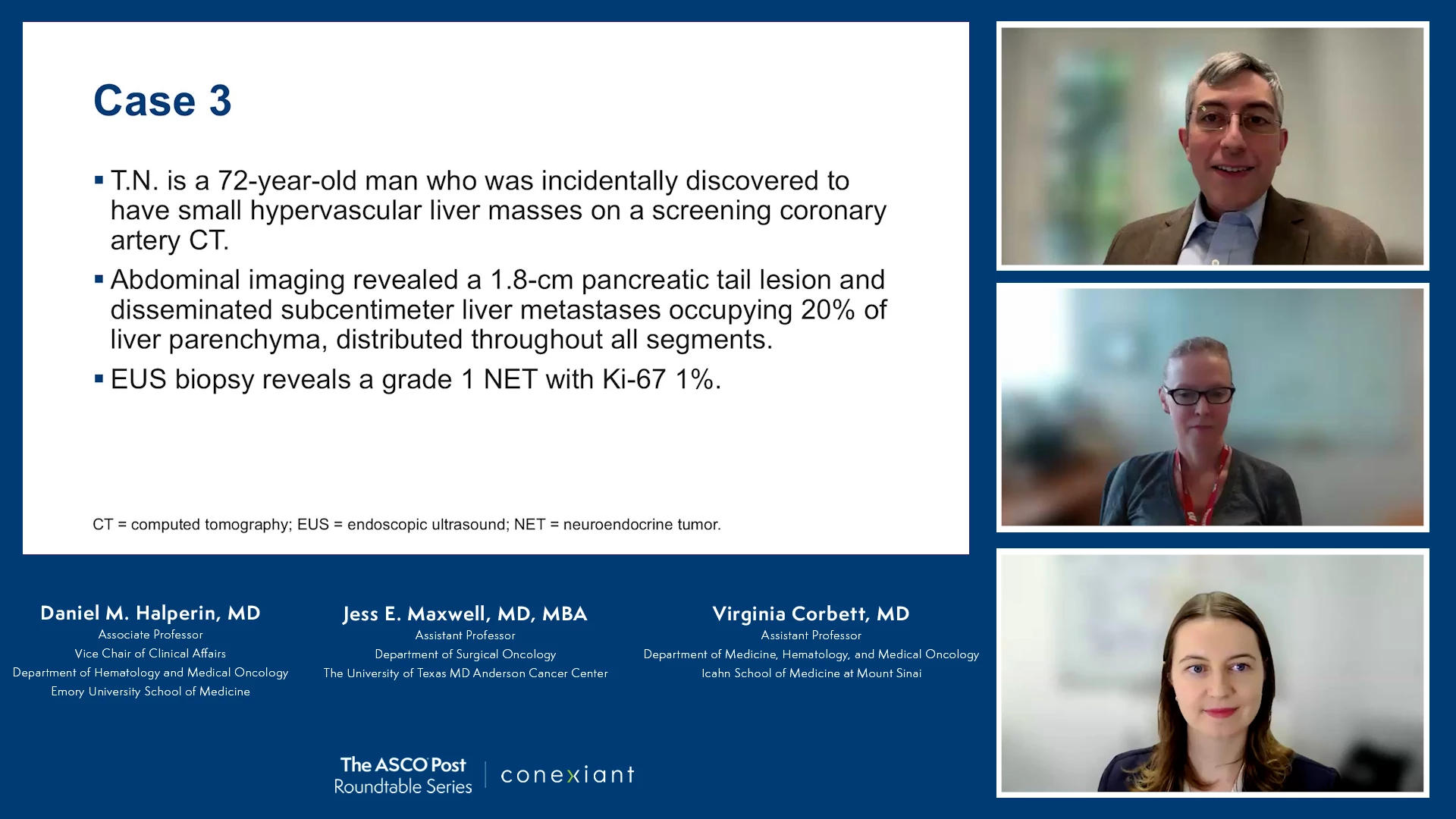
Case 3: Radioligands in Advanced Neuroendocrine Tumor
This is Part 3 of Evolving Treatment Paradigms for Neuroendocrine Tumors, a three-part video roundtable series. Scroll down to watch the other videos from this roundtable. In this video, Drs. Daniel Halperin, Jess Maxwell, and Virginia Corbett discuss the use of radioligand therapy for advanced neuroendocrine tumors (NETs). The patient is a 72-year-old man who was incidentally found to have small hypervascular liver masses on screening computer tomography. Abdominal imaging revealed a 1.8-cm pancreatic tail lesion and disseminated subcentimeter liver metastases occupying 20% of the liver parenchyma. A biopsy confirmed a grade 1 NET with Ki-67 1%. In the conversation that follows, the faculty discuss whether they would proceed with surgery or opt for a somatostatin analog, treatment options after disease progression, sequencing considerations when using peptide receptor radionuclide therapy, and more.
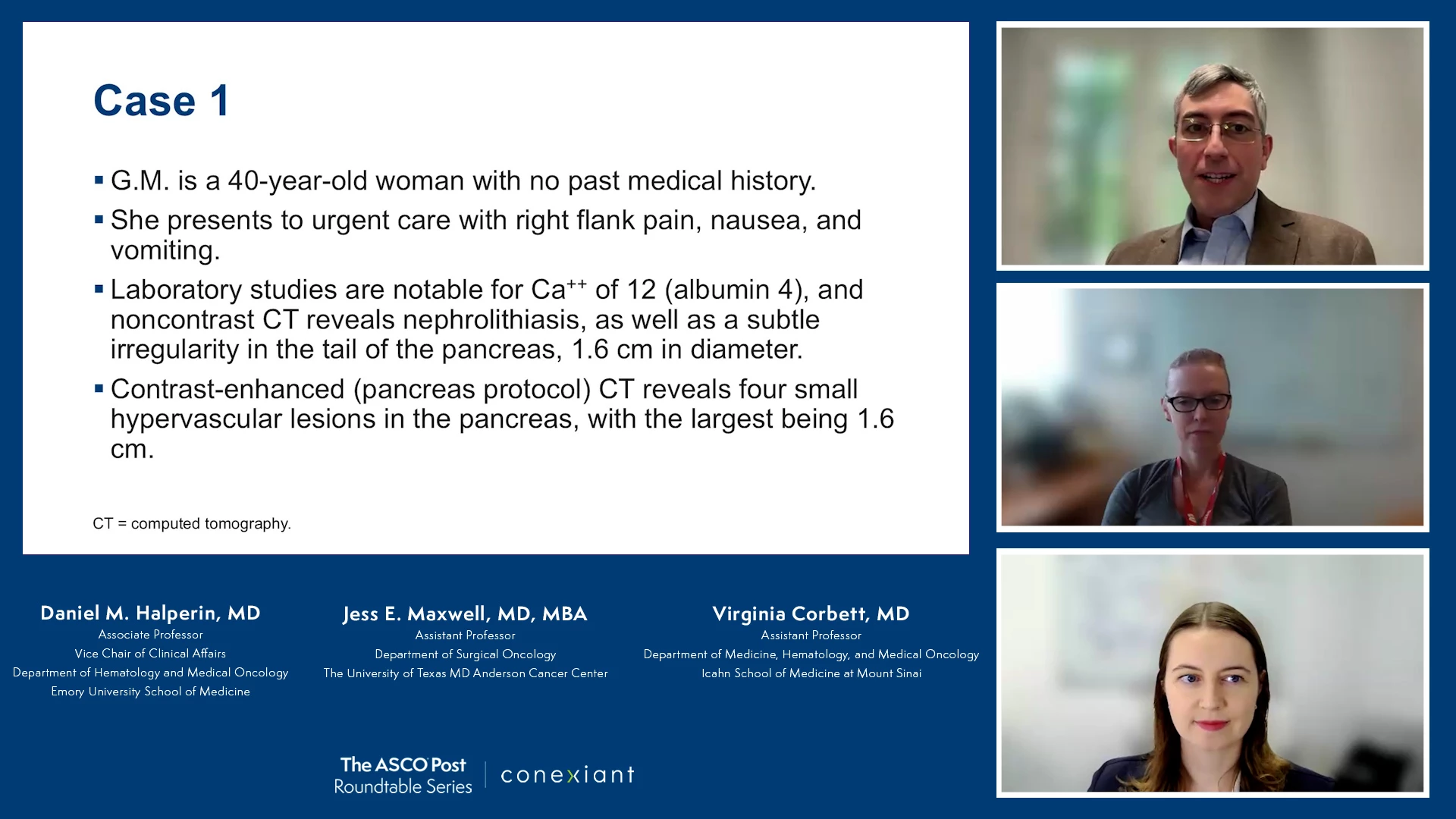
Case 1: Pancreatic Neuroendocrine Tumor
This is Part 1 of Evolving Treatment Paradigms for Neuroendocrine Tumors, a three-part video roundtable series. Scroll down to watch the other videos from this roundtable. In this video, Drs. Daniel Halperin, Jess Maxwell, and Virginia Corbett discuss the treatment of pancreatic neuroendocrine tumors (NET). The patient is a 40-year-old woman who presents with right flank pain, nausea, and vomiting. She is found to have hypercalcemia secondary to hyperparathyroidism, and a contrast-enhanced computed tomography reveals multifocal hypervascular lesions in the pancreas. Genetic testing confirms multiple endocrine neoplasia, type 1 (MEN1). In the conversation that follows, the faculty discuss the role of genetic testing in patients with multifocal pancreatic NETs, when surgical resection is appropriate, and potential treatment options for this patient—including temozolomide, everolimus, and radioligand therapy.
Addition of Tumor Treating Fields to Gemcitabine/Nab-Paclitaxel in Locally Advanced Pancreatic Adenocarcinoma
In a phase III trial (PANOVA-3) reported in the Journal of Clinical Oncology, Babiker et al examined the survival benefit of using tumor treating fields (TTFields) with gemcitabine/nab-paclitaxel in patients with unresectable locally advanced pancreatic adenocarcinoma. Study Details In the global...
Cell-Free DNA Fragmentomics–Based Model for Early Detection of Pancreatic Cancer
In a Chinese study reported in the Journal of Clinical Oncology, Yin et al attempted to develop a cell-free DNA (cfDNA) fragmentomics–based model for early detection of pancreatic ductal adenocarcinoma. Study Details The study consisted of training and validation cohorts from several Chinese...
Low-Value Cancer Screenings May Continue for Years Following Guideline Change to Limit Unnecessary Tests
Stopping the widespread use of unnecessary, potentially harmful cancer screenings may take up to 13 years and potentially longer following the implementation of new guidelines, according to a recent study published by LeLaurin et al in BMJ Quality & Safety. Background The U.S. Preventive...

Asaf Maoz, MD, on Pancreatic Surveillance Eligibility Criteria
Asaf Maoz, MD, of Dana-Farber Cancer Institute/Mass General Brigham/Harvard Medical School, discusses the sensitivity of age and family history criteria for determining eligibility for pancreatic cancer surveillance among individuals with a hereditary risk for the malignancy (Abstract 10500).

Sameek Roychowdhury, MD, PhD, on Telemedicine in Clinical Trials
Sameek Roychowdhury, MD, PhD, of the Arthur G. James Cancer Hospital and Richard J. Solove Research Institute at The Ohio State University Wexner Medical Center, discusses a recently opened telemedicine clinical trial of pemigatinib in patients with advanced or metastatic FGFR-mutated pancreatic cancer, and the germination of a new initiative, TNT Cancer, which focuses on leveraging telemedicine to bring trials nationwide.
