Andrew D. Zelenetz, MD, PhD, on Mantle Cell Lymphoma: Expert Perspective on Key Clinical Trials
2020 ASH Annual Meeting & Exposition
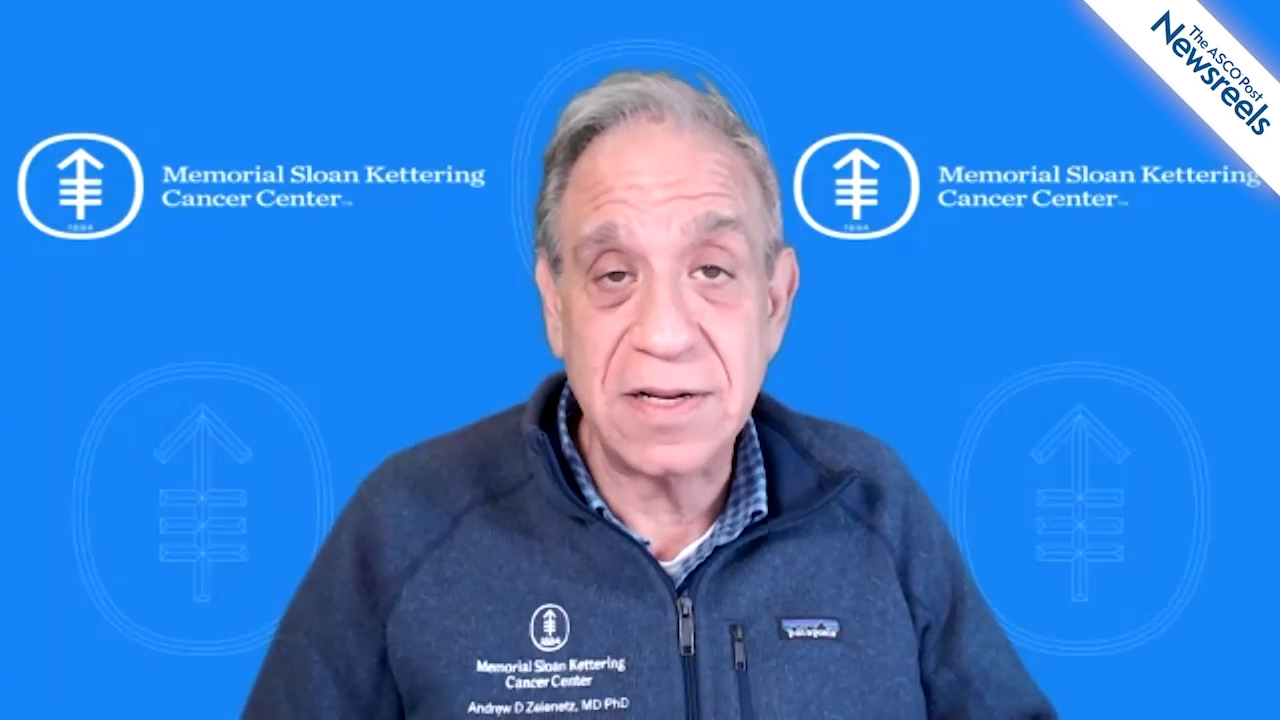
Andrew D. Zelenetz, MD, PhD, of Memorial Sloan Kettering Cancer Center, offers his expert views on five treatment studies in mantle cell lymphoma focusing on the next-generation BTK inhibitor LOXO-305; lisocabtagene maraleucel; minimal residual disease monitoring following autologous stem cell transplantation with or without rituximab maintenance; the antibody-drug conjugate VLS-101; and venetoclax, lenalidomide, and rituximab (Abstracts 117, 118, 120, 121, 122).
The ASCO Post Staff
Curtis Lachowiez, MD, of The University of Texas MD Anderson Cancer Center, discusses an interim analysis of a phase Ib/II study showing that venetoclax plus chemotherapy represents an effective regimen, particularly in patients with newly diagnosed and relapsed or refractory acute myeloid leukemia. The regimen appears to be an effective bridge to hematopoietic stem cell transplantation (Abstract 332).
The ASCO Post Staff
Lena E. Winestone, MD, MSHP, of the University of California, San Francisco and Benioff Children’s Hospital, reviews different aspects of bias in treatment delivery, including patient selection for clinical trials; racial and ethnic disparities in survival for indolent non-Hodgkin diffuse large B-cell lymphomas; and end-of-life hospitalization of patients with multiple myeloma, as well as outcome disparities (Abstracts 207-212).
The ASCO Post Staff
Andrew D. Zelenetz, MD, PhD, of Memorial Sloan Kettering Cancer Center, discusses phase II results from a single-center study that explored a novel approach for high-risk patients with mantle cell lymphoma. Among patients with TP53 wild-type disease, the data suggested this treatment was effective (Abstract 119).
The ASCO Post Staff
Steven M. Horwitz, MD, of Memorial Sloan Kettering Cancer Center, discusses data from the largest multicenter retrospective analysis of allogeneic hematopoietic transplantation, which supports its curative potential in patients with mature T-cell lymphoma, a group marked by poor survival and limited treatment options (Abstract 41).
The ASCO Post Staff
Hassan Awada, MD, of the Taussig Cancer Institute, Cleveland Clinic Foundation, discusses the use of newer machine-learning techniques to help decipher a set of prognostic subgroups that could predict survival, thus potentially improving on traditional methods and moving acute myeloid leukemia into the era of personalized medicine (Abstract 34).