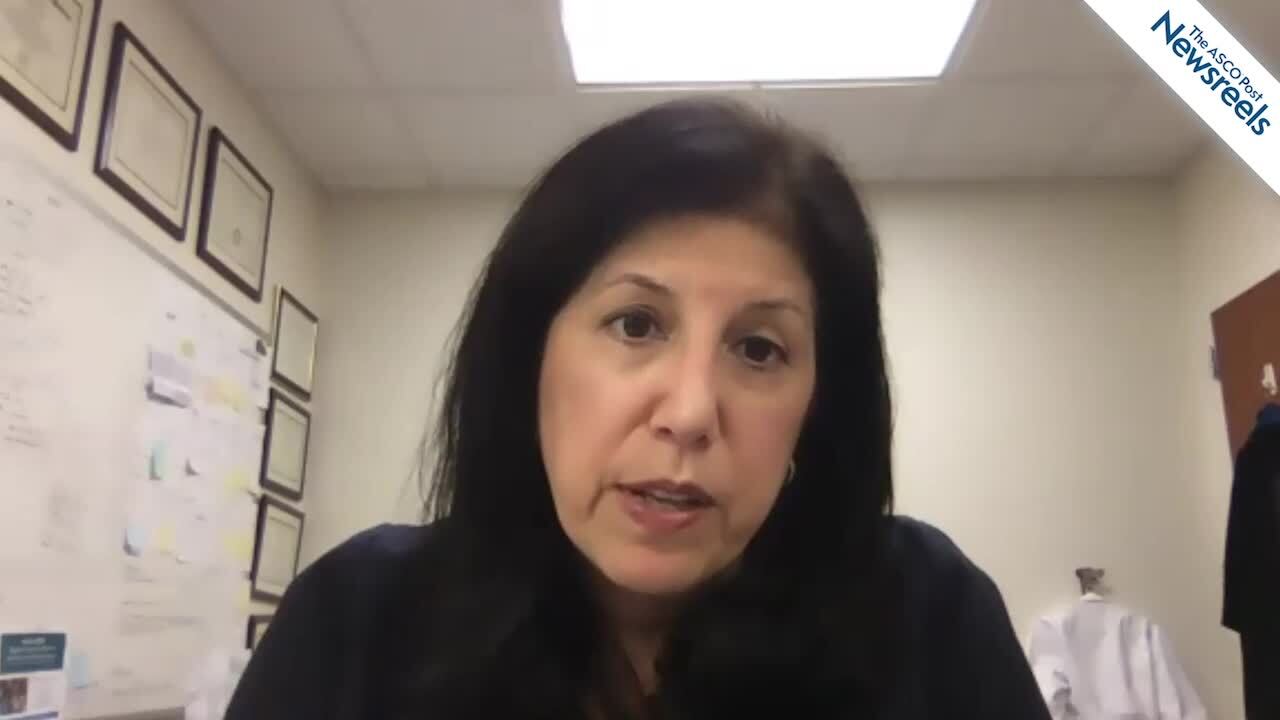
Katelyn T. Byrne, PhD, on the Clinical Impact of T-Cell Inflammation in the Tumor Microenvironment
AACR Annual Meeting 2021
Katelyn T. Byrne, PhD, of the Perelman School of Medicine at the University of Pennsylvania, discusses the first in-depth analysis of the impact of selicrelumab, an anti-CD40 antibody, which was found to enrich T cells in pancreatic tumors, activate the immune system, and alter the tumor stroma (Abstract CT005).
The ASCO Post Staff
Michel Sadelain, MD, PhD, of Memorial Sloan Kettering Cancer Center, discusses the challenges in developing CAR T-cell therapy, as well as the progress being made, such as creating hybrid CAR and T-cell receptors that should enable T cells to recognize much lower levels of antigens. The field, he says, is poised to take on a range of solid tumors to extend the successes in hematologic malignancies.
The ASCO Post Staff
Richard S. Finn, MD, of UCLA Medical Center, discusses updated efficacy and safety data from the IMbrave150 trial of patients receiving atezolizumab plus bevacizumab vs sorafenib as first-line treatment for unresectable hepatocellular carcinoma (Abstract CT009).
The ASCO Post Staff
Vivek Subbiah, MD, of The University of Texas MD Anderson Cancer Center, discusses data on selpercatinib that showed promising activity across a variety of RET fusion–positive cancers, including treatment-refractory gastrointestinal malignancies. This analysis highlights the need for genomic profiling to identify actionable oncogenic drivers.
The ASCO Post Staff
Brian I. Rini, MD, of Vanderbilt University, discusses the IMmotion151 trial results on overall survival and the association of gene expression and clinical outcomes with atezolizumab plus bevacizumab vs sunitinib in patients with locally advanced or metastatic renal cell carcinoma (Abstract CT188).
The ASCO Post Staff
Linda T. Vahdat, MD, MBA, of Memorial Sloan Kettering Cancer Center, discusses results of a phase II trial designed to test the concept that targeting the tumor microenvironment by depleting copper may prevent metastases, essentially disrupting the infrastructure that contributes to tumor spread.