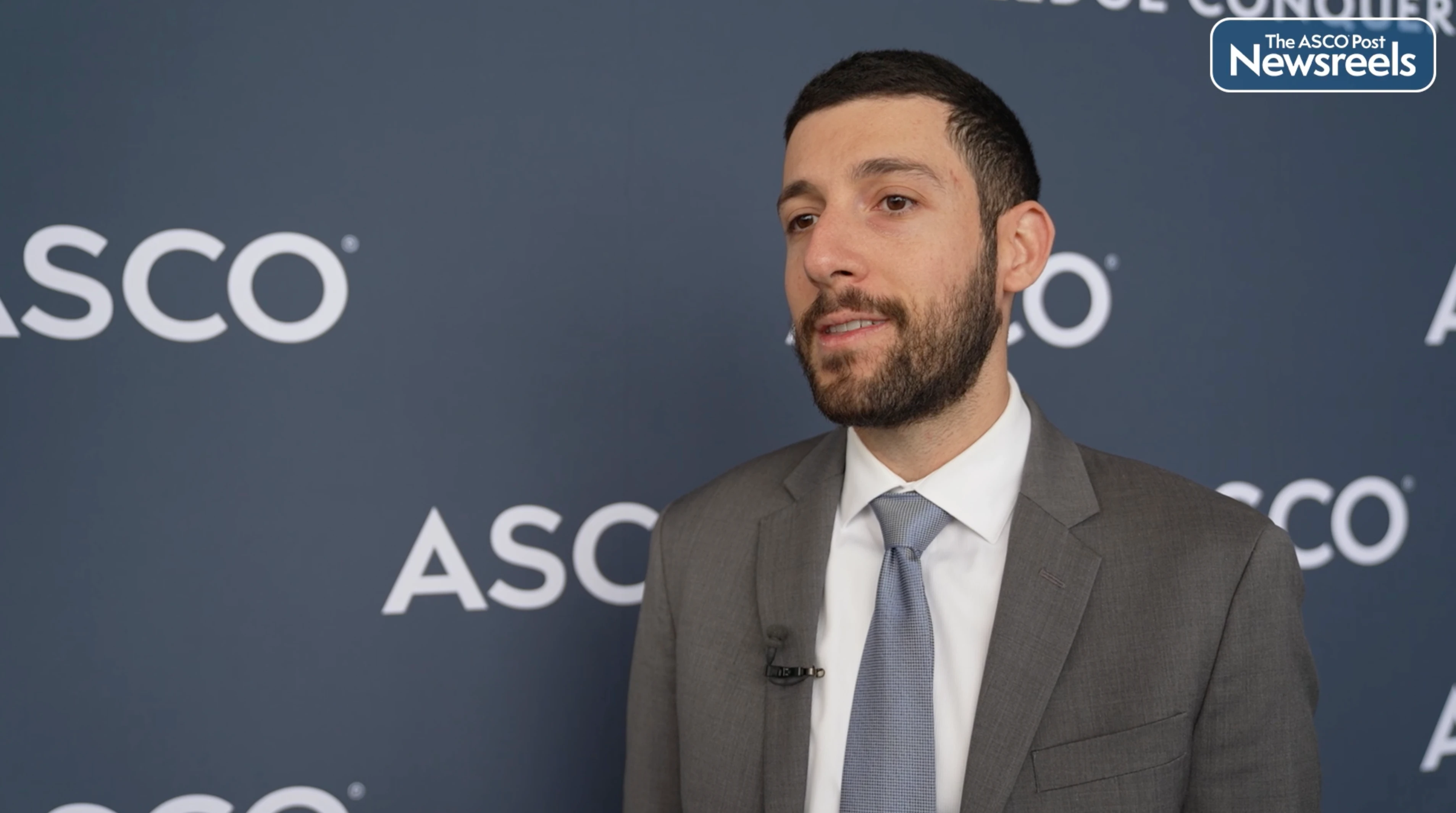
Samuel J. Klempner, MD, FASCO, on Advanced HER2-Negative Gastroesophageal Cancer: Ivonescimab Plus FOLFOX
ASCO 2026
Samuel J. Klempner, MD, FASCO, of Mass General Brigham Cancer Institute, discusses a single-arm phase II study—which is currently open and enrolling (ClinicalTrials.gov identifier NCT07070466)—evaluating ivonescimab in combination with FOLFOX as front-line therapy in locally advanced, unresectable, or metastatic HER2-negative gastroesophageal adenocarcinoma (Abstract TPS4246).
The ASCO Post Staff
Elizabeth McDonald, MD, PhD, of the University of Pennsylvania, discusses results from a retrospective cohort study that showed that the use of GLP-1 treatment was associated with a significantly lower incidence of breast cancer, after accounting for age, race, ethnicity, BMI, breast density, and type 2 diabetes status (Abstract 10506).
Lorenza Rimassa, MD, of IRCCS Humanitas Research Hospital, and David James Pinato, MD, PhD, of Imperial College London, discuss positive phase III findings in intermediate-stage hepatocellular carcinoma (HCC) with immunotherapy-based combinations with TACE, second-line data from IMbrave251, and novel targeted and bispecific antibody therapies.
Jennifer A. Woyach, MD, of The Arthur G. James Cancer Hospital and Richard J. Solove Research Institute at The Ohio State University, discusses the ongoing, actively recruiting ROCKET-CLL trial, which is a phase III study aiming to compare the efficacy of rocbrutinib vs pirtobrutinib in patients with relapsed or refractory chronic lymphocytic leukemia (CLL)/small lymphocytic lymphoma (SLL) who have been pretreated with Bruton tyrosine kinase covalent inhibitors (Abstract TPS7100).
For more information about the trial, visit ClinicalTrials.gov (identifier NCT07342478).
The ASCO Post Staff
Nicholas C. Turner, MD, PhD, of the Royal Marsden Hospital, Institute of Cancer Research, discusses results from the primary analysis of the persevERA BC trial, which investigated giredestrant plus palbociclib vs letrozole plus palbociclib as first-line therapy in patients with estrogen receptor (ER)-positive, HER2-negative locally advanced or metastatic breast cancer (Abstract LBA1006).
Dor Abelman, BS, of the University of Toronto, reviews results of a comparison of two minimally invasive measurable residual disease (MRD) assays—BM-informed cfDNA whole-genome sequencing (cfWGS) and plasma proteomic MRD (EasyM)—in patients with multiple myeloma (Abstract 7546).