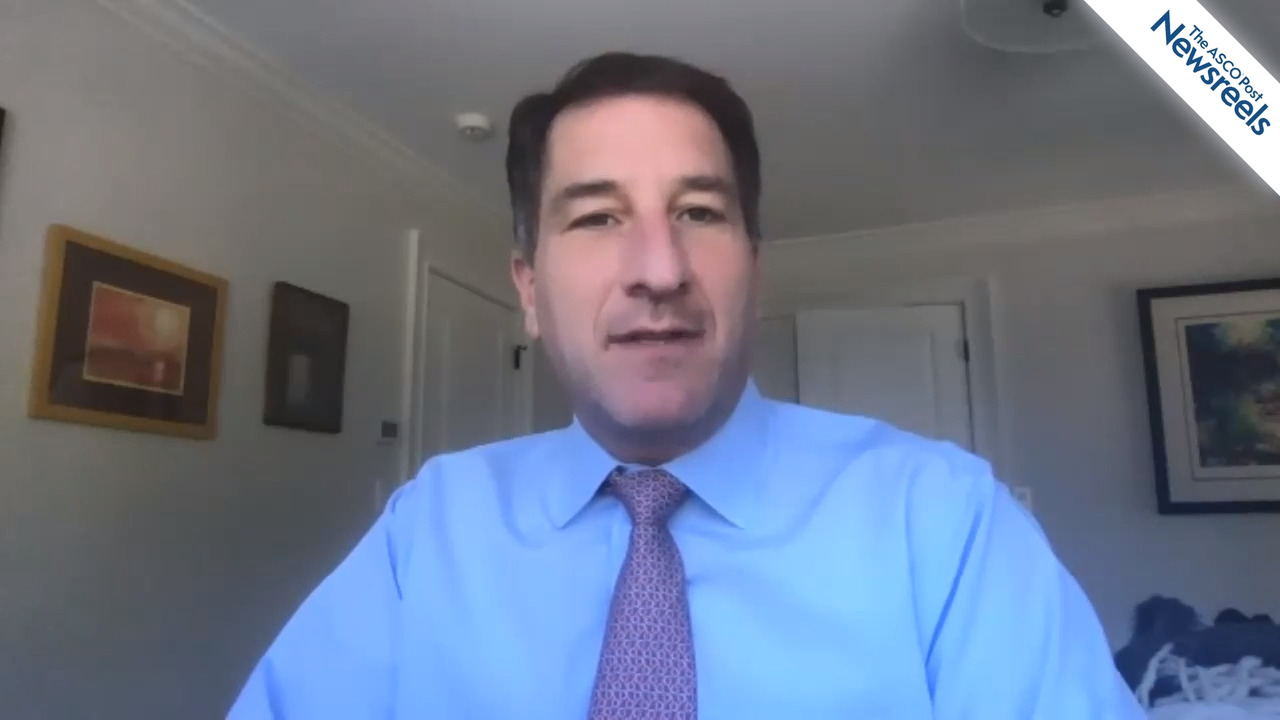
Eric Jonasch, MD, on a Novel Therapy for Von Hippel-Lindau Disease–Associated RCC
ASCO20 Virtual Scientific Program
Eric Jonasch, MD, of The University of Texas MD Anderson Cancer Center, discusses phase II study findings on the oral HIF-2α inhibitor known as MK-6482, which showed efficacy and tolerability in patients with Von Hippel-Lindau (VHL)–associated clear cell renal cell carcinoma as well as responses in other VHL-related lesions (Abstract 5003).
The ASCO Post Staff
Jeffrey A. Meyerhardt, MD, MPH, of Dana-Farber Cancer Institute, discusses results from the CALGB/SWOG 80702 trial of celecoxib plus standard adjuvant therapy with fluorouracil, leucovorin, and oxaliplatin (FOLFOX). Adding celecoxib to standard chemotherapy did not significantly improve disease-free or overall survival (Abstract 4003).
The ASCO Post Staff
Cynthia X. Ma, MD, PhD, of Washington University, discusses results from the ALTERNATE trial, which showed neither fulvestrant nor fulvestrant plus anastrozole significantly improved endocrine-sensitive disease rate compared with anastrozole alone in postmenopausal patients with locally advanced estrogen receptor–positive, HER2-negative breast cancer (Abstract 504).
The ASCO Post Staff
Nikhil C. Munshi, MD, of Dana-Farber Cancer Institute, discusses initial results from the KarMMa tria, showing that idecabtagene vicleucel, a B-cell maturation antigen-targeted CAR T-cell therapy, demonstrated deep and durable responses in patients with heavily pretreated relapsed or refractory multiple myeloma. Efficacy and safety data support a favorable clinical benefit-risk profile across the target dose range (Abstract 8503).
The ASCO Post Staff
Patricia Pautier, MD, of Institut Gustave Roussy, discusses final results of the phase II LMS-02 study, which showed the combination of doxorubicin and trabectedin to be an effective first-line therapy for patients with leiomyosarcoma, with an acceptable safety profile (Abstract 11506).
The ASCO Post Staff
Shaji Kumar, MD, of the Mayo Clinic, discusses findings from the ENDURANCE trial, which showed bortezomib, lenalidomide, and dexamethasone should remain the standard of care in patients with newly diagnosed standard- or intermediate-risk multiple myeloma, for whom early autologous stem cell transplant is not intended (Abstract LBA3).