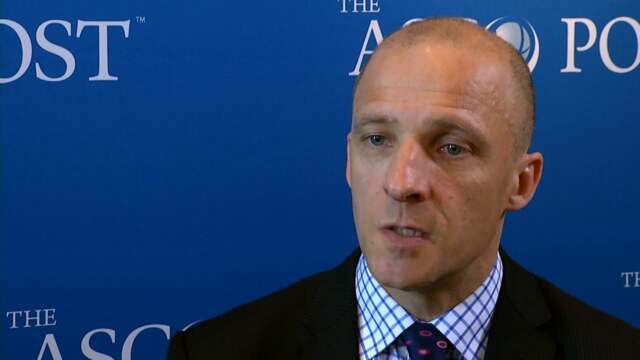
William G. Wierda, MD, PhD, on Updates to the Management of CLL
2015 NCCN Annual Conference
William G. Wierda, MD, PhD, of The University of Texas MD Anderson Cancer Center, discusses the latest information on managing CLL and his optimism that a cure is in sight.
Mario E. Lacouture, MD
Mario E. Lacouture, MD, of Memorial Sloan Kettering Cancer Center, discusses the effect on patients of dermatologic toxicities associated with targeted therapies: their psychosocial impact, financial burden, physiological pain, and potential to alter therapy. But the side effects of targeted treatments can and should be addressed.
Gregory A. Otterson, MD
Gregory A. Otterson, MD, of The Ohio State University Comprehensive Cancer Center and the James Cancer Hospital and Solove Research Institute, discusses the evolution of lung cancer treatment from adjuvant chemotherapy to immunotherapy and the clinical trials underway.
Samuel M. Silver, MD, PhD, and Al B. Benson III, MD, FACP, FASCO
Samuel M. Silver, MD, PhD, of the University of Michigan Comprehensive Cancer Center, and Al B. Benson III, MD, FACP, FASCO, of Robert H. Lurie Comprehensive Cancer Center of Northwestern University, discuss the evolution of NCCN Guidelines, which are available free online, and the components that make them effective: a multidisciplinary approach, the participation of patient advocates, consistency, and affordability of the evidence.
Thomas A. D’Amico, MD
Thomas A. D’Amico, MD, of Duke Cancer Institute, discusses the superior efficacy of thoracoscopic lobectomy. This minimally invasive procedure is used in only 50% of lung cancer surgeries in the United States, in 30% of procedures in Asia, and in as few as 10% to 20% of procedures in Europe.
Eric Jonasch, MD
Eric Jonasch, MD, of The University of Texas, MD Anderson Cancer Center, discusses the progress being made in kidney cancer treatment and the clinical trials that focused on sunitinib, sorafenib, and everolimus, among others.