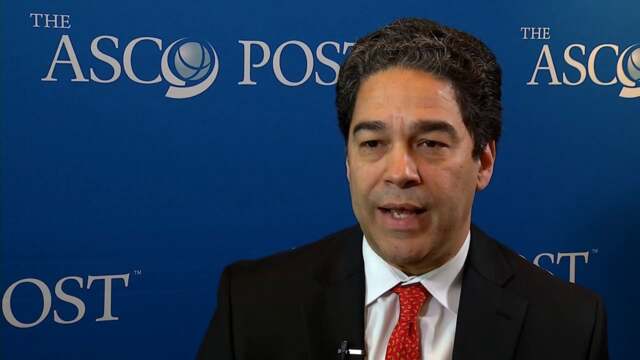
John A. Thompson, MD, on Treatment Options for Advanced Melanoma
2015 NCCN Annual Conference
John A. Thompson, MD, of the Fred Hutchinson Cancer Research Center and Seattle Cancer Care Alliance, discusses the latest immunotherapeutics for advanced melanoma, including pembrolizumab, trametinib, nivolumab, and dabrafenib.
Amy Cyr, MD
Amy Cyr, MD, of the Siteman Cancer Center at Barnes-Jewish Hospital and Washington University School of Medicine, discusses advances made in the treatment of early-stage breast cancer: less radiation and a shorter course, the rising use of molecular profiling, and less invasive surgery and reduced amounts of surgery.
Jerald P. Radich, MD
Jerald P. Radich, MD, of the Fred Hutchinson Cancer Research Center and Seattle Cancer Care Alliance discusses the evolution in treating and monitoring CML and whether monitoring at 3 and 6 months will ultimately prove useful.
Andrew J. Armstrong, MD, ScM
Andrew J. Armstrong, MD, ScM, of Duke Cancer Institute, discusses the recent practice-changing landmark studies that showed significant increases in survival for men with castration-resistant prostate cancer and led to updates in the NCCN Guidelines for this disease.
Axel Grothey, MD
Axel Grothey, MD, of the Mayo Clinic Cancer Center, discusses how the NCCN Guidelines can help oncologists make strategic choices of the various agents available to treat metastatic colorectal cancer, individualizing patient care.
Hans Gerdes, MD
Hans Gerdes, MD, of Memorial Sloan Kettering Cancer Center, discusses a new approach to the management of early-stage esophageal cancers with endoscopic resections.