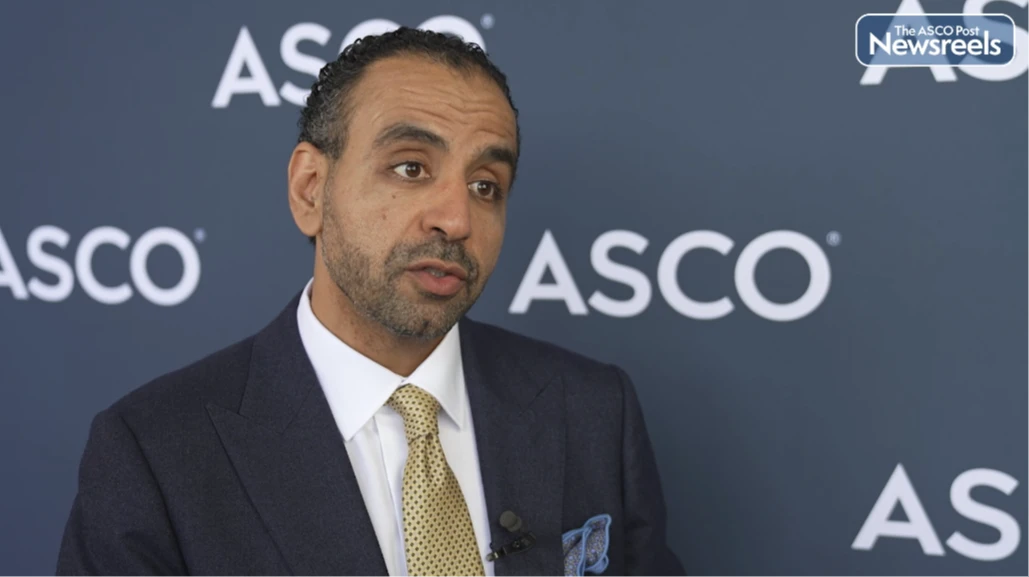
Robert C. Stein, PhD, MBBChir, FRCP, on ER-Positive HER2-Negative Early Breast Cancer: Test-Directed Chemotherapy
ASCO 2026
Robert C. Stein, PhD, MBBChir, FRCP, of the National Institute for Health Research University College London Hospitals Biomedical Research Centre, discusses the first results from the phase III randomized OPTIMA trial, which is comparing chemotherapy decisions made with the Prosigna (PAM50) gene expression test with standard treatment with estrogen receptor (ER)-positive, HER2-negative early breast cancer (Abstract 500).
The ASCO Post Staff
Peter Schmid, MD, PhD, FRCP, of Queen Mary University of London, shares more data from the phase III lidERA BC clinical trial. This analysis focused on the efficacy and safety of giredestrant in patients with estrogen receptor (ER)-positive, HER2-negative early breast cancer, looking at both premenopausal and postmenopausal populations (Abstract 502).
The ASCO Post Staff
Ramaswamy Govindan, MD, FASCO, of Alvin J. Siteman Cancer Center at Washington University School of Medicine in St. Louis, presents the final overall survival results from the randomized phase III Alliance A081105 trial, which evaluated adjuvant erlotinib vs observation after complete resection of EGFR-mutant non–small cell lung cancer (NSCLC) (Abstract 8001).
The ASCO Post Staff
Katharina C. Kaehler, MD, of University Hospital (UKSH), Campus Kiel, presents an update on the primary outcome and sensitivity analyses from the PIVOTAL phase III trial of daromun, a combination of two fibronectin-targeting immunocytokines (L19IL2 and L19TNF), as a neoadjuvant intralesional therapy in patients with resectable, locally advanced stage III melanoma (Abstract LBA9517).
The ASCO Post Staff
Ramez N. Eskander, MD, of UC San Diego Moores Cancer Center, presents an updated overall survival analysis and examination of subsequent therapy in patients with endometrial cancer treated with pembrolizumab plus carboplatin/paclitaxel as compared to carboplatin/paclitaxel plus placebo in the NRG-GY018 trial (Abstract 5502).
The ASCO Post Staff
Veronica Diermayr, PhD, of EDDC and A*STAR, discusses the use of artificial intelligence (AI) driven strategy called H&E 2.0 in gastric and esophageal cancer. Researchers tested the feasibility of training deep-learning models on hematoxylin and eosin images of gastroesophageal carcinomas and their ability to predict EBC-129 antigen expression directly from these images. EBC-129 is an experimental antibody-drug conjugate that targets N256-glycosylated CEACAM5/6, which is highly expressed on solid tumors, including gastroesophageal cancers (Abstract 4018).