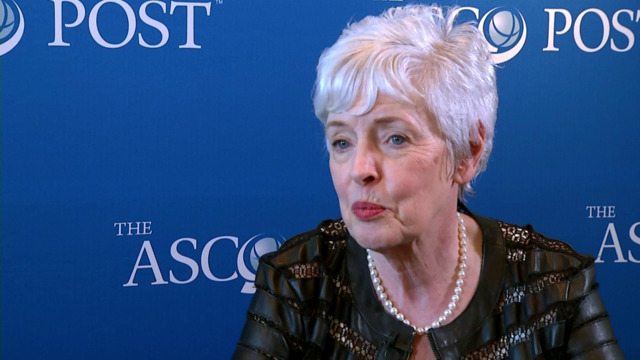
Robert W. Carlson, MD, and William J. Gradishar, MD, on Optimizing Treatment of HER2-Positive Breast Cancer
2015 NCCN Annual Conference
Robert W. Carlson, MD, Chief Executive Officer, National Comprehensive Cancer Network, and William J. Gradishar, MD, Robert H. Lurie Comprehensive Cancer Center of Northwestern University, discuss the evolution of the breast cancer guidelines, the inclusion of varied fields––such as plastic surgery, pathology, patient advocacy, and radiation–– and new treatment changes.
Kenneth C. Anderson, MD
Kenneth C. Anderson, MD, of Dana-Farber/Brigham and Women’s Cancer Center, discusses the incredible progress made in treating multiple myeloma, with nine therapeutic options approved in the past decade, two drugs approved this year, and a number of new options on the horizon.
Eric Jonasch, MD
Eric Jonasch, MD, of The University of Texas, MD Anderson Cancer Center, discusses the progress being made in kidney cancer treatment and the clinical trials that focused on sunitinib, sorafenib, and everolimus, among others.
Mario E. Lacouture, MD
Mario E. Lacouture, MD, of Memorial Sloan Kettering Cancer Center, discusses the effect on patients of dermatologic toxicities associated with targeted therapies: their psychosocial impact, financial burden, physiological pain, and potential to alter therapy. But the side effects of targeted treatments can and should be addressed.
Rebecca H. Johnson, MD
Although guidelines worldwide mandate fertility preservation for newly diagnosed patients within their reproductive window, most patients are still not referred or offered this option. Rebecca H. Johnson, MD, of Mary Bridge Children’s Hospital, explains the steps that need to be taken when counseling patients.
Mary Lou Smith, JD, MBA
Mary Lou Smith, JD, MBA, of the Research Advocacy Network, discusses, from the perspective of a patient advocate, the value of the NCCN guidelines and the impact they have made on cancer care.